
Last updated August 25, 2026
Free on-site gate assessment - hinges, posts, and your LiftMaster or Nice gate operator checked before anything is quoted
The assessment is free and the quote is the invoice.
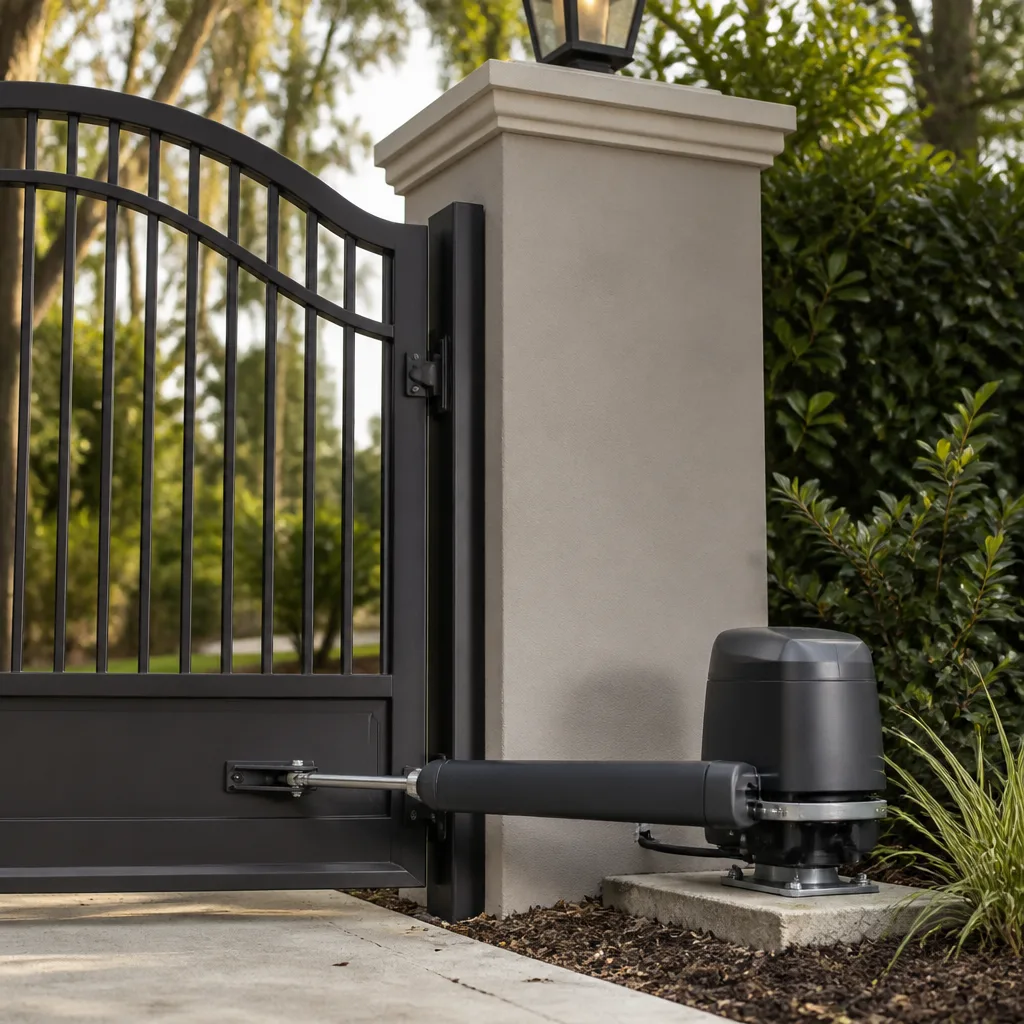
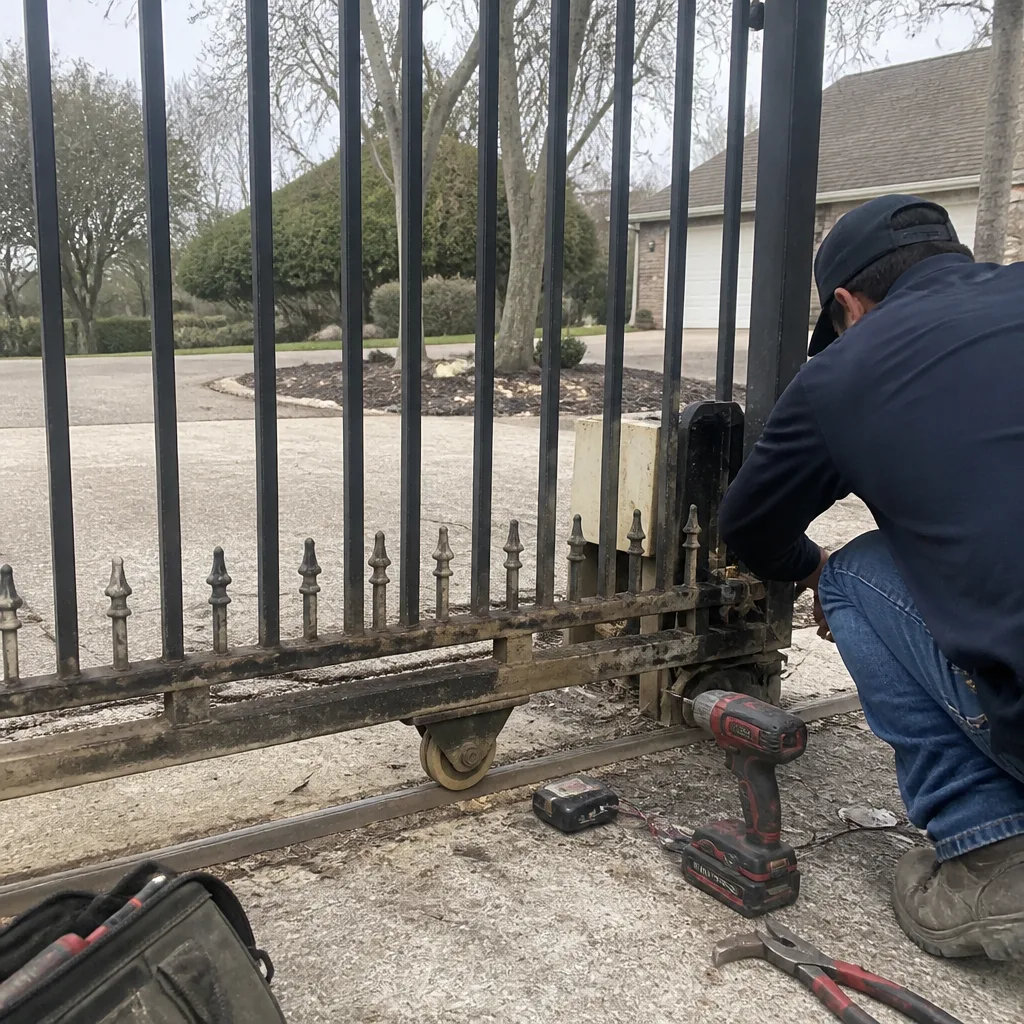 Before
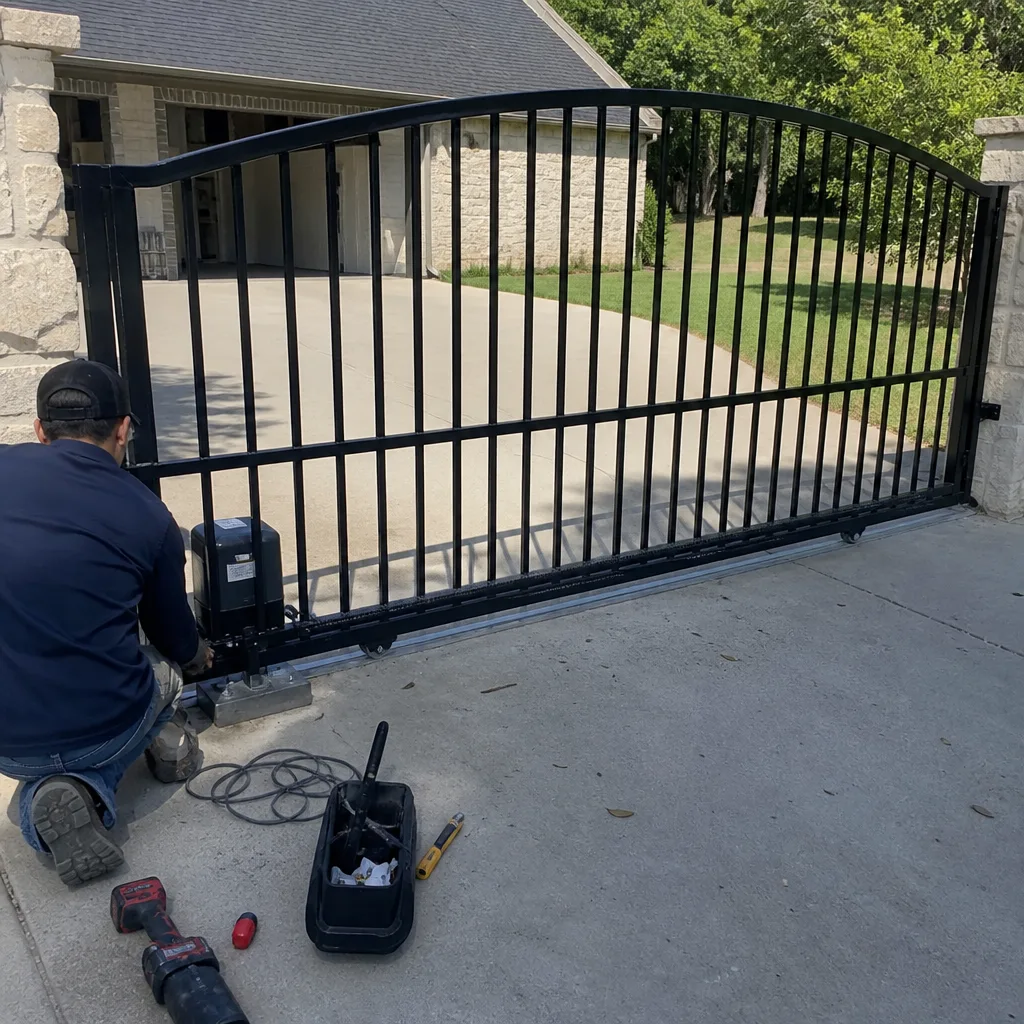 After
After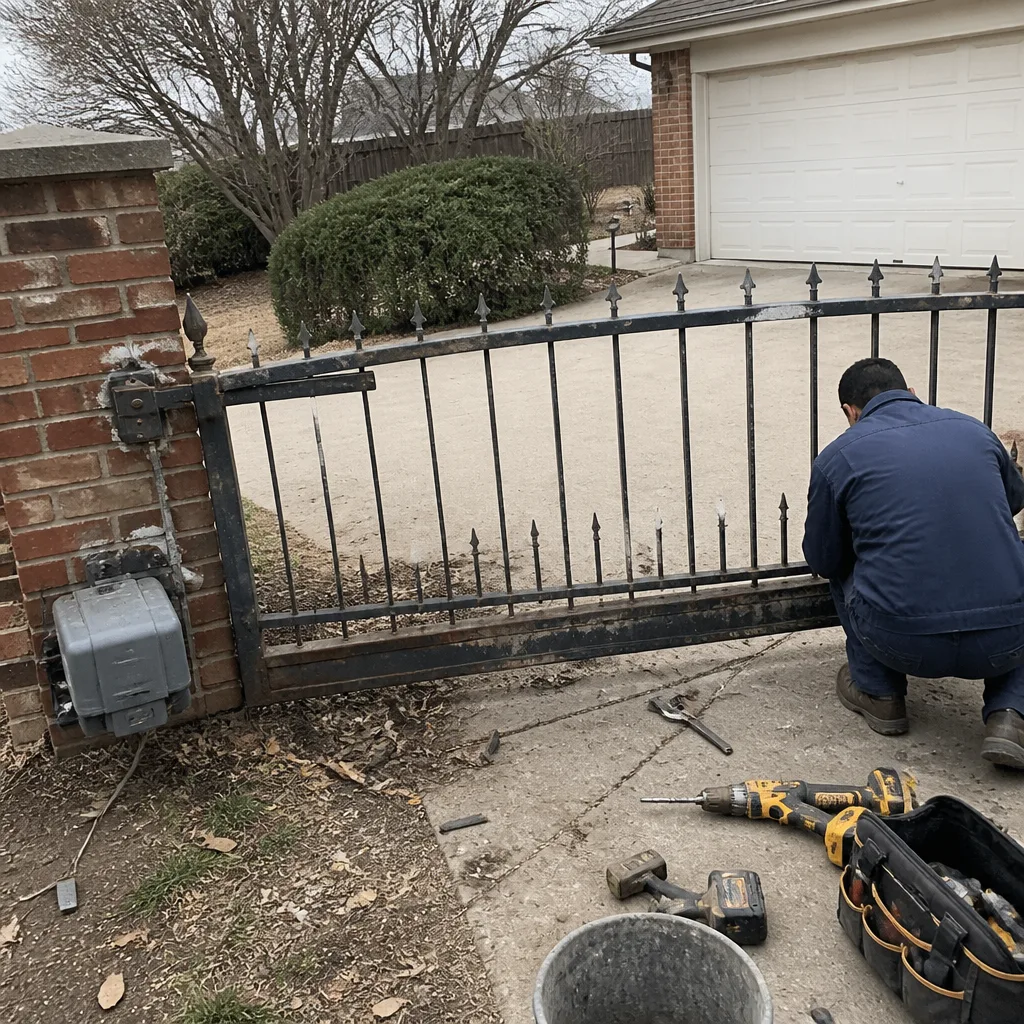 Before
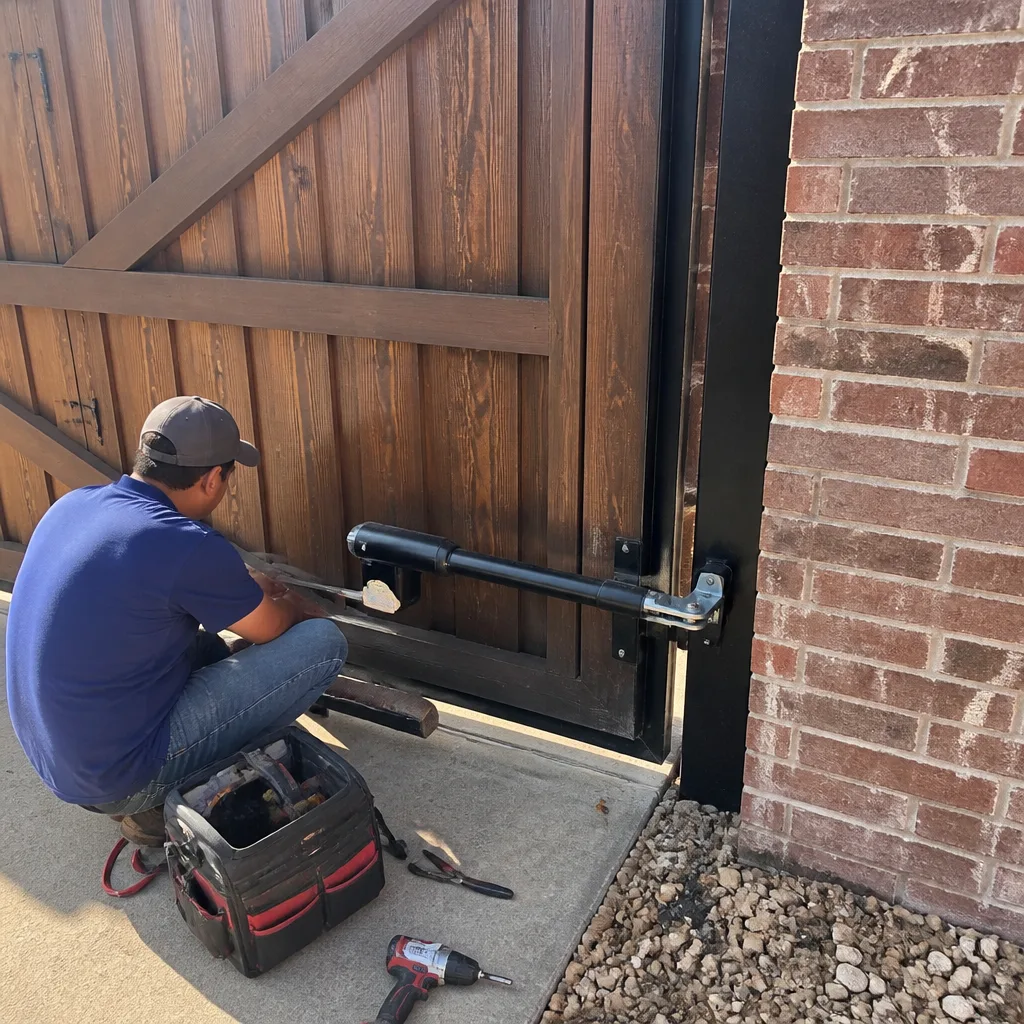 After
After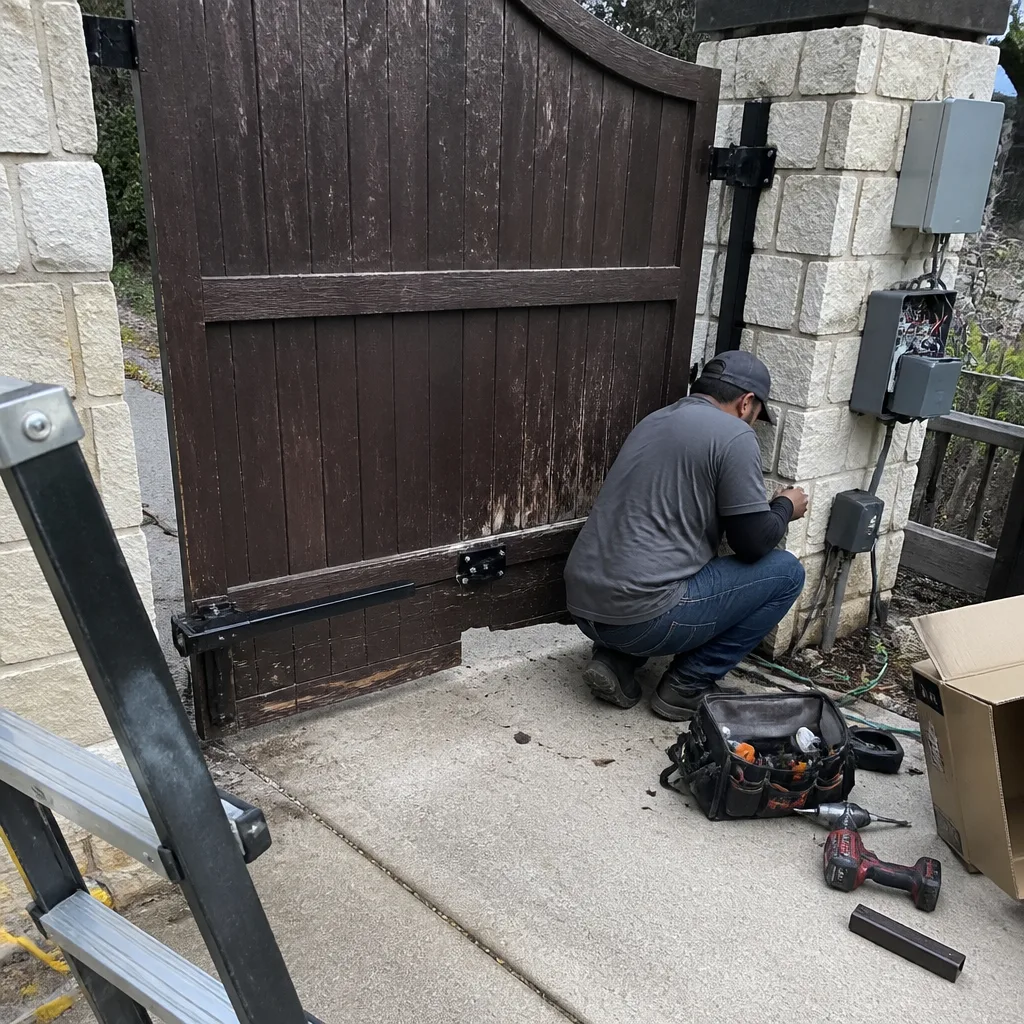 Before
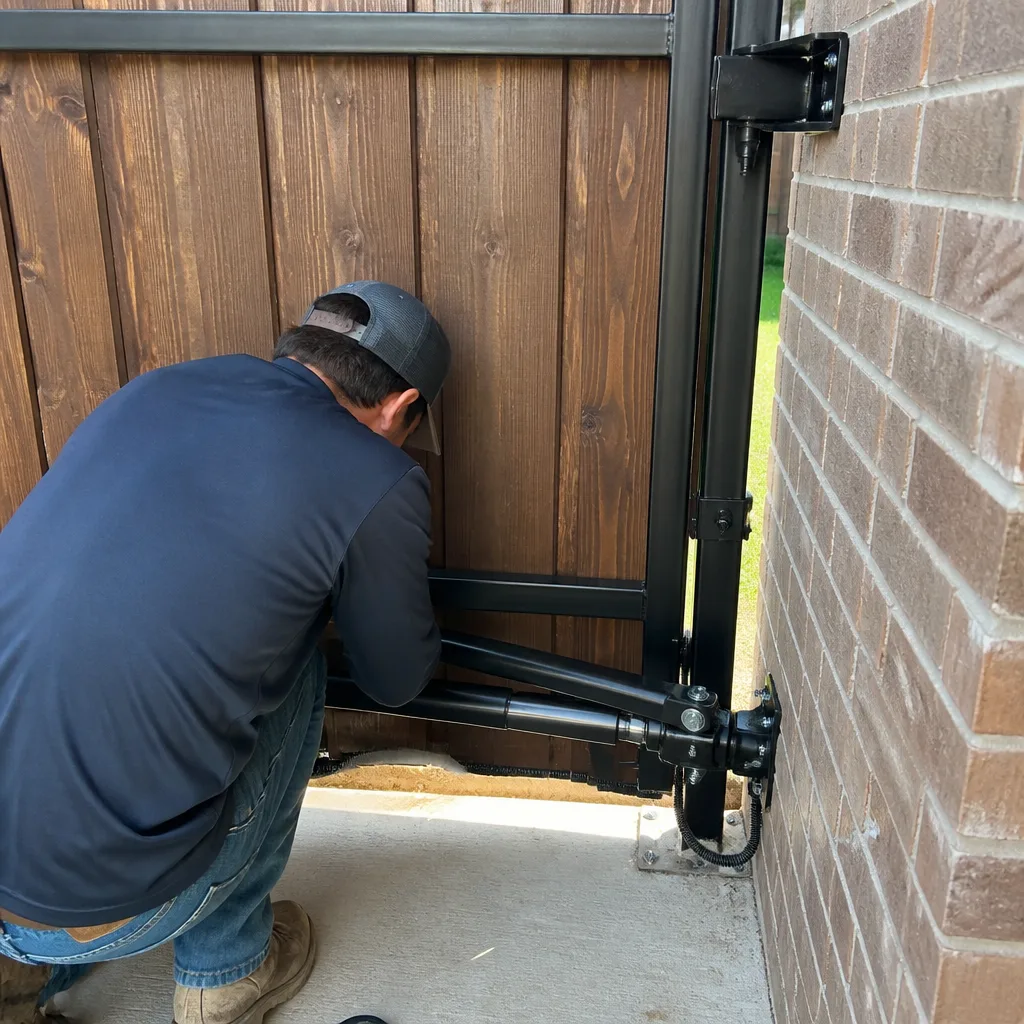 After
AfterGate Repair Warning Signs: A Rockwall Homeowner’s Reference Guide
Most gate failures in Rockwall don’t happen without warning. They happen quietly, over months, and the warning signs are almost always visible well before the gate stops moving. A gate that works today can be showing five or six separate indicators that it’s heading toward a breakdown, and catching those indicators early is the difference between a $200 repair and a $2,800 replacement. This guide walks through the specific warning signs we look for on driveway gates throughout Rockwall and the surrounding communities, so you’ll know exactly what to watch for, what each sign means, and when it’s time to call someone who works on gates every day.
Quick Answer
The most common warning signs that a gate in Rockwall needs repair are: visible sagging or dragging, grinding or squealing noises when it moves, slow or jerky operation, the opener running but the gate not moving, rust at the hinges and welds, and the gate drifting open or closed after it stops. Any one of these means the gate is working harder than it should be, and that extra strain shortens the life of the opener, the hinges, and the gate itself. Most of these problems cost under $400 to fix if caught early, and well over $2,000 if ignored for a year or more.
Table of Contents
- A Gate That Sags or Drags on the Ground
- Grinding, Squealing, or Popping Noises
- Slow or Jerky Gate Movement
- The Opener Runs but the Gate Doesn’t Move
- Rust and Corrosion at Hinges, Welds, and Joints
- The Gate Drifts Open or Closed After It Stops
- Electrical Warning Signs: Keypad, Sensors, and Remote Issues
- Common Mistakes to Avoid
- When to Call a Professional
- Frequently Asked Questions
A Gate That Sags or Drags on the Ground
A sagging gate is the single most common repair call we make in Rockwall, and it’s almost always the same story: the gate has been sagging for months, someone has been propping it up or dragging it along the concrete, and by the time we’re called, the hinge posts are leaning, the hinges themselves are stretched, and the opener has been working against the extra weight for so long that its internal gears are worn. The gate didn’t fail all at once. It gave warning after warning, and the earliest one was visible from the driveway.
Here’s what sagging looks like in practice. A gate that was hung level now sits lower at the latch end, sometimes by an inch or more. You’ll see scrape marks on the concrete where the gate has been dragging. The gap between the gate and the post will be wider at the top than the bottom, or vice versa. And if you lift the gate by hand at the latch end, you’ll feel play: up-and-down movement that shouldn’t be there.
In Rockwall, the soil plays a real role in this. The clay-heavy soils in this part of North Texas expand and contract with moisture through the year, and gate posts set in that ground can shift gradually, especially after the wet springs and dry summers we get here. A post that was plumb when it was set can be out by two or three degrees within five years. That tilt transfers directly to the gate, and the hinges become the first point of failure.
What you can check yourself in about two minutes:
- Look at the latch gap. If the gap between the gate and the latch post is wider at the top than the bottom, the gate has sagged or the post has leaned.
- Look at the ground clearance. If the gate is closer to the concrete on one end than the other, the gate has dropped.
- Lift the gate. Grab the latch end and lift up. More than a quarter-inch of vertical play usually means worn hinges or a loose hinge post.
- Watch the gate open. If the latch end dips as the gate swings, the hinges are carrying uneven load and wearing faster on one side.
If you see any of these, don’t wait. A sagging gate puts all of its weight on the opener motor every time it cycles. The opener is designed to move the gate, not to carry it. When the gate sags, the motor is doing both jobs, and motor replacement is three to five times the cost of a hinge and post repair.
Grinding, Squealing, or Popping Noises
Your gate should be quiet. Not silent, exactly, because every motor makes some sound, and chain-drive openers have a slight mechanical whir that’s normal. But grinding, squealing, screeching, or popping is never normal, and each of those sounds tells you something specific about what’s failing.
We tell Rockwall homeowners to listen to their gate the way they listen to their car. A car that makes a new noise is telling you something, and the same is true for a gate. Here’s what the common noises mean:
- High-pitched squeal during operation: Bearings in the opener or the gate hinges are dry or worn. The squeal comes from metal on metal without lubrication, or from a bearing race that’s breaking down.
- Grinding or crunching when the gate moves: The drive gear inside the opener is stripping, or the gate is dragging on the concrete and grinding against it. The first is a motor problem. The second is a gate problem. Both get worse fast.
- Popping or clicking when the gate starts or stops: Hinge bolts are loose, or the gate has shifted on its mounts. The popping is the gate shifting under torque.
- Humming with no movement: The opener motor is running but the drive mechanism isn’t engaging. This is the classic stripped-gear or broken-chain sound, and it means the gate isn’t going to move at all very soon.
In our experience, the squealing noise is the one Rockwall homeowners ignore the longest, because it starts quietly and builds gradually. A hinge bearing that gets lubricated at the first squeak will often run fine for years. The same bearing left dry for another six months will wear into an egg shape, and then the hinge must be cut off and replaced. That’s the difference between a $120 service call and a $600 hinge job.
One note specific to Rockwall’s climate: our summer heat accelerates lubrication breakdown. Grease that stays put in a cooler climate thins out and runs off in July and August, leaving bearings dry. If you hear a new noise in the summer, that’s often the reason. A seasonal tune-up catches this before it becomes a failure, which is why we offer the Ironworks Gate Co. home $89 seasonal tune-up every spring and fall.
Slow or Jerky Gate Movement
A gate that moves slower than it used to, or that hesitates and lurches, is a gate that’s fighting something. The opener is a fixed-output machine. It pushes with a certain amount of force at a certain speed, and when the gate moves slower than that design speed, something is adding resistance, or the opener is losing the ability to overcome it.
The most common causes of slow or jerky movement, in the order we see them in the Rockwall area:
- The gate itself is dragging or binding. A sagging gate, a misaligned track, or debris in the wheel path adds resistance, and the opener compensates by working harder. The movement slows and gets choppy as the motor strains.
- The gate hardware is binding. Hinges that have seized, wheels that have stopped turning, or a post that’s shifted into the gate’s path all create points of friction. The gate binds at those points and surges through them.
- The opener’s drive components are wearing. Chains stretch, belts glaze, gears lose teeth. The opener still runs, but it’s slipping internally, and the gate moves in lurches as the drive catches and releases.
- Low voltage at the opener. This is more common in Rockwall than people expect, especially on long driveway runs where the power feed runs a hundred feet or more from the house. Voltage drop makes the motor weak, and a weak motor moves the gate slowly.
- The gate’s weight has increased. Wood gates absorb moisture and get heavier. Metal gates collect modifications: someone adds a sign, a lock, a decorative panel, and the gate now weighs more than the opener was sized for.
A gate that moves slowly is a gate that’s overloading its opener on every cycle. The opener’s duty cycle assumes a gate within its rated weight moving at normal speed. Add 30 percent more resistance, and every open and close shortens the opener’s life. We’ve replaced openers in Rockwall that died within three years of installation because the gate they were driving was dragging the entire time, and no one addressed it.
If your gate was installed by a builder and has never been checked, and it’s now moving slowly, the most likely culprit is accumulated wear on the gate itself, not the opener. The opener is usually the victim, not the cause. Fixing the gate first is the correct repair, and it’s the repair that lasts.
The Opener Runs but the Gate Doesn’t Move
This is the warning sign that most often gets ignored until the gate simply stops working entirely, because the opener still sounds like it’s doing its job. You press the remote, you hear the motor hum or whir, and the gate doesn’t move. Or it moves a few inches and stops. That sound is the opener trying to drive a gate it can no longer move, and every time it happens, the internal damage gets worse.
Here’s what’s typically happening when the opener runs and the gate doesn’t move:
- Stripped drive gear: Common on a range of openers including Ghost Controls and Mighty Mule models. The nylon or composite gear inside the opener is designed to sacrifice itself before the motor burns out, and once it strips, the motor spins freely and the gate goes nowhere.
- Broken or jumped chain/belt: The drive chain that connects the opener to the gate has broken a link, or the belt has slipped off its pulley. The motor runs, the drive wheel spins, and the connection to the gate is lost.
- Disconnected drive arm: The arm that connects the opener to the gate has come loose at the attachment point, usually because the bolts backed out over time. The opener cycles, the arm flops, the gate sits still.
- Overload protection tripping: The opener senses resistance it can’t overcome and shuts the drive down, sometimes after a brief hum. This is the opener protecting itself from a gate that’s too heavy or too badly misaligned to move.
- Capacitor failure: The starter capacitor that gives the motor its initial jolt has failed, so the motor hums but can’t get started. Replacing the capacitor is usually a quick fix if caught early.
One detail that matters for Rockwall homeowners with swing gates: if the opener is a piston-style linear actuator and the gate is a heavy steel double-swing, the piston’s internal screw can wear out, and the symptom is exactly this: motor runs, gate doesn’t move. The fix is typically a new actuator rather than a new opener, which is a less expensive repair if it’s caught before the motor burns out from strain.
If your opener runs and your gate doesn’t move, stop cycling the opener. Each cycle with no gate movement is putting full load on components that have already failed or are about to. Call a gate specialist and have it diagnosed. Most of these failures are repairable for under $350 if addressed at the first sign, and closer to $1,200 if the opener runs itself to death first.
Rust and Corrosion at Hinges, Welds, and Joints
Rust is the slow killer of gates in Rockwall, and the worst of it happens where you can’t see it from the driveway. The cosmetic rust on the face of a gate is usually just surface oxidation. The structural rust is at the hinge barrels, inside the weld joints, under the bottom rail where water collects, and anywhere two pieces of metal meet and trap moisture.
Rockwall’s climate works against steel gates in a specific way. We get enough humidity and rain that bare steel oxidizes readily, and we get hot summers that expand the metal and open micro-cracks in paint and powder coating. Water gets into those cracks, sits against the steel, and the rust process accelerates. A gate that looks fine from ten feet away can have significant structural rust at the hinge welds after five or six years outdoors.
What to look for when you inspect your gate for rust:
- Orange staining or bubbling under the paint: Rust is forming underneath the coating. The bubble is the paint lifting off an active corrosion site.
- Flaking or pitting at weld joints: The welds are the most stressed points on the gate, and rust at a weld means the joint is losing material and strength.
- Rust at the bottom rail, especially on the inside face: Water collects here and on horizontal surfaces. This is often the first place a steel gate fails.
- Discolored water streaks running down from hinges: The hinge internals are rusting, and the runoff is staining the post or the gate face.
- A rust-colored dust at the hinge barrels: The bearing surfaces inside the hinge are oxidizing, and the dust is the evidence of ongoing wear.
Rust at the hinges is urgent in a different way than surface rust. The hinge is where all the gate’s weight concentrates into a small area. A hinge that’s lost 30 percent of its material to rust is a hinge that’s going to tear out, and when a gate tears off its hinges, it can fall, and a fallen gate is both a safety hazard and an expensive repair. If you catch it while the hinge is still intact, the repair is typically a hinge replacement plus a re-hang, often under $500 depending on the gate. If you wait for the tear-out, you’re looking at welding repair, possible post replacement, and realignment, and that job routinely runs over $1,500.
The practical rule: if the rust is orange and powdery on the surface, it’s cosmetic and can wait for a repaint. If the rust is at a joint, a weld, or a hinge, and especially if it’s flaking or pitted, get it looked at before it becomes structural.
The Gate Drifts Open or Closed After It Stops
A gate that creeps, drifts, or settles after the opener stops is a gate that’s no longer holding position, and that’s a problem with a name: it means the opener’s internal brake or lock is failing, or the gate’s balance has shifted so far that gravity is pulling it one direction, and the opener can’t hold it.
On swing gates, drift usually means one of two things. Either the gate’s hinges have worn to the point where the gate is no longer level, and gravity is pulling the gate downhill, or the opener’s internal holding mechanism has failed and is letting the piston or drive arm back-drive. Both are progressive: they start as a slow creep and end as a gate that swings freely in the wind.
On sliding gates, drift usually means the track has a low spot and the gate rolls to it. Think of a sliding gate like a train on a rail. If the rail is level, the gate stops where the opener stops it. If the track has settled or the wheel brackets have worn unevenly, the gate rolls to the low end. In Rockwall, where the ground shifts with moisture, track settlement is common on older installations, especially after a wet spring followed by a dry summer.
There’s a safety component here that matters. A drifting gate is an unpredictable gate. One day it drifts a few inches. The next day it drifts two feet, and two feet is enough to block the driveway, clip a car bumper, or close on someone walking through. If you have young grandchildren in and out, or deliveries coming up the drive, a drifting gate is a liability.
This is a repair that almost always requires a professional diagnosis, because the cause could be the opener, the hinges, the post, or the track, and the wrong guess means the drift comes back within weeks. The diagnostic itself is straightforward for someone who works on gates daily, and the repair usually involves re-leveling the gate, replacing worn hinge pins, or servicing the opener’s brake assembly.
Electrical Warning Signs: Keypad, Sensors, and Remote Issues
Not every gate problem is mechanical. A good portion of the service calls we make in Rockwall are for electrical and automation issues: keypads that work intermittently, remotes that only work up close, safety sensors that trip for no reason, and opener boards that reset themselves. These are warning signs too, and they often appear weeks or months before a complete failure.
Here are the electrical symptoms and what they usually indicate:
- The keypad works sometimes and not others: Usually a failing keypad membrane or corroded wiring at the keypad connection. Rockwall’s humidity and temperature swings are hard on outdoor keypads. Intermittent operation now typically becomes total failure within a few months.
- The remote only works within ten or fifteen feet: The opener’s receiver antenna may be damaged, or the receiver board itself is failing. A healthy remote transmitter works from fifty feet or more. A shrinking range is a receiver problem, and it doesn’t fix itself.
- The safety sensors trip and reverse the gate with nothing in the way: Misaligned sensors, a failing photo eye, or sun glare hitting the sensor at certain times of day. In Rockwall, the low afternoon sun angle can false-trip a photo eye that’s not properly shielded. This is usually a quick fix, but it’s also a safety system, so it shouldn’t be bypassed.
- The opener resets and loses its limits or remote programming: A failing control board or an intermittent power connection. If the gate suddenly won’t close all the way or stops in the wrong position, and you have to reprogram it, the board is starting to go.
- The opener runs fine from the keypad but not the remote, or vice versa: A failed input channel on the control board. This is a board-level repair, and it’s the kind of diagnosis that’s worth having done by someone who services multiple opener brands including DoorKing, Elite, and Linear, because the failure modes differ from board to board.
Electrical failures have a way of being unpredictable in a way mechanical failures aren’t. A sagging gate gives you months of visible warning. A control board can work perfectly on Tuesday and be dead on Wednesday. That’s why the intermittent symptoms matter so much. The keypad that works “most of the time” is the keypad that’s about to not work at all, usually on a day when you’re already late.
One point worth making clearly: electrical and opener work is not handyman work. These systems run on low voltage, but they’re integrated with line voltage in the opener, and a miswired opener can damage the board, the motor, or worse. If your gate has an electrical symptom, the right call is a gate automation specialist, not a general repair person taking a look between other jobs.
Common Mistakes to Avoid
- Ignoring the noise until the gate stops. Every grinding or squealing gate we’ve seen in Rockwall was making noise for months before it failed. The noise is the early warning. The repair cost at the noise stage is almost always a fraction of the repair cost at the failure stage.
- Pushing the gate by hand when the opener is connected. Unless you’ve disengaged the opener, forcing the gate manually back-drives the opener’s gear train and can strip the gears or damage the drive mechanism. If the gate won’t move, disengage the opener first, or leave it alone and call someone.
- Lubricating the problem away. Spray lubricant on a noisy hinge or wheel quiets the symptom without fixing the underlying wear. The gate sounds better for a few weeks, and the real problem keeps getting worse. Lubrication is maintenance, not repair.
- Propping a sagging gate with blocks or wedges. We see this more often than we’d like to believe. Propping the gate transfers the load to the opener and the latch post in ways neither was designed for, and the gate keeps sagging anyway. The prop damages the gate and delays the real repair.
- Replacing the opener without fixing the gate. If the gate sags, binds, or drags, a new opener is going to die young the same way the old one did. The correct order is: fix the gate, then replace the opener only if it actually needs it. A gate that moves freely will let an opener run for a decade or more.
- DIY electrical repairs without disconnecting power. Gate openers have capacitors that hold charge even after the breaker is off. A charged capacitor can deliver a serious shock. If you’re not trained on these systems, don’t open the enclosure.
- Waiting until the gate completely fails to get a quote. The quote for a hinge repair is always less than the quote for a hinge repair plus a motor replacement plus a re-hang. If you see a warning sign, getting a quote now is purely money saved.
When to Call a Professional
Some gate maintenance is genuinely doable for a homeowner: wiping down the keypad, clearing debris from the track, touching up surface rust with a wire brush and paint. But the moment the problem involves the gate’s structure, the opener, or the electrical system, it’s time for someone who does this work every day. Call a gate professional when the gate sags or drags, when it makes grinding or popping noises, when it moves slowly, when the opener runs without moving the gate, when rust has reached the hinges or welds, or when the keypad, sensors, or remotes act up. These are all symptoms of underlying mechanical or electrical problems, and they all get more expensive the longer they’re left alone. Ironworks Gate Co. offers free estimates in Rockwall - call (936) 715-3043 and we’ll come look at the gate, tell you exactly what it needs, and give you a written price before any work begins.
Frequently Asked Questions
Gate repair in Rockwall typically runs between $150 and $600 for most common fixes: hinge replacement, sensor alignment, keypad replacement, or drive gear repair. More involved work, like a full gate re-hang or opener replacement, runs from $800 to $2,500 depending on the gate’s size, weight, and opener brand. Every repair we quote is priced upfront and agreed before any work starts, so the number on the quote is the number on the invoice. Call (936) 715-3043 for an exact quote - estimates are free.
Yes, most gate repairs in Rockwall can be completed the same day, and many of our service calls are a single visit. Our most common repairs, like hinge replacements, sensor realignment, and keypad swaps, are done in under two hours with parts we carry on the truck. A live person answers our phones 24 hours a day, so call (936) 715-3043 and we’ll get you on the schedule for the next available slot.
Hinge and sag repairs are the most common gate repair we do in Rockwall, and the soil here is part of the reason why. The clay-heavy ground shifts with moisture, posts lean slightly over time, gates drop out of level, and hinges take the load. It’s a repair we’ve done hundreds of times across Rockwall and the surrounding communities, and it’s the repair that most often prevents a much more expensive opener failure later.
A quality gate opener in North Texas should last ten to fifteen years if the gate it’s driving stays level and moves freely. The weather here is hard on electronics, and openers that live on gates that sag or bind routinely die in three to five years. The gate kills the opener far more often than the opener fails on its own, which is why we always check the gate itself before condemning the opener.
We service and repair nine major gate automation brands, including Ghost Controls, DoorKing, Elite, and Mighty Mule. Our technicians are trained on each brand’s design and failure modes, so the diagnosis is correct the first time, whatever is on your driveway. If your opener is still under manufacturer warranty, we can often handle the claim for you as well.
Our $89 seasonal tune-up includes a full inspection of the gate’s hinges, welds, wheels, and track, lubrication of all moving parts, adjustment of the opener’s limits and force settings, tightening of all bolts and brackets, and a test of the safety features. It’s the cheapest insurance you can buy for a gate in Rockwall, and it catches the warning signs in this guide before they become repair bills. Call (936) 715-3043 to schedule one.
The Bottom Line
A gate that’s telling you something is a gate you can still fix for a reasonable price. The sag, the squeal, the slow crawl, the drift: these are all warnings, and every one of them is a repair that gets more expensive the longer it’s ignored. In Rockwall, where the soil shifts and the summers bake, gates work hard, and the ones that last are the ones that get attention early. If your gate is showing any of the signs in this guide, get it looked at before it stops working entirely. The call is free, the estimate is upfront, and the repair is done right and backed in writing.
Written by Victor Salinas, Owner at Ironworks Gate Co., serving Rockwall since 2013.