
Last updated August 25, 2026
Free on-site gate assessment - hinges, posts, and your LiftMaster or Nice gate operator checked before anything is quoted
The assessment is free and the quote is the invoice.
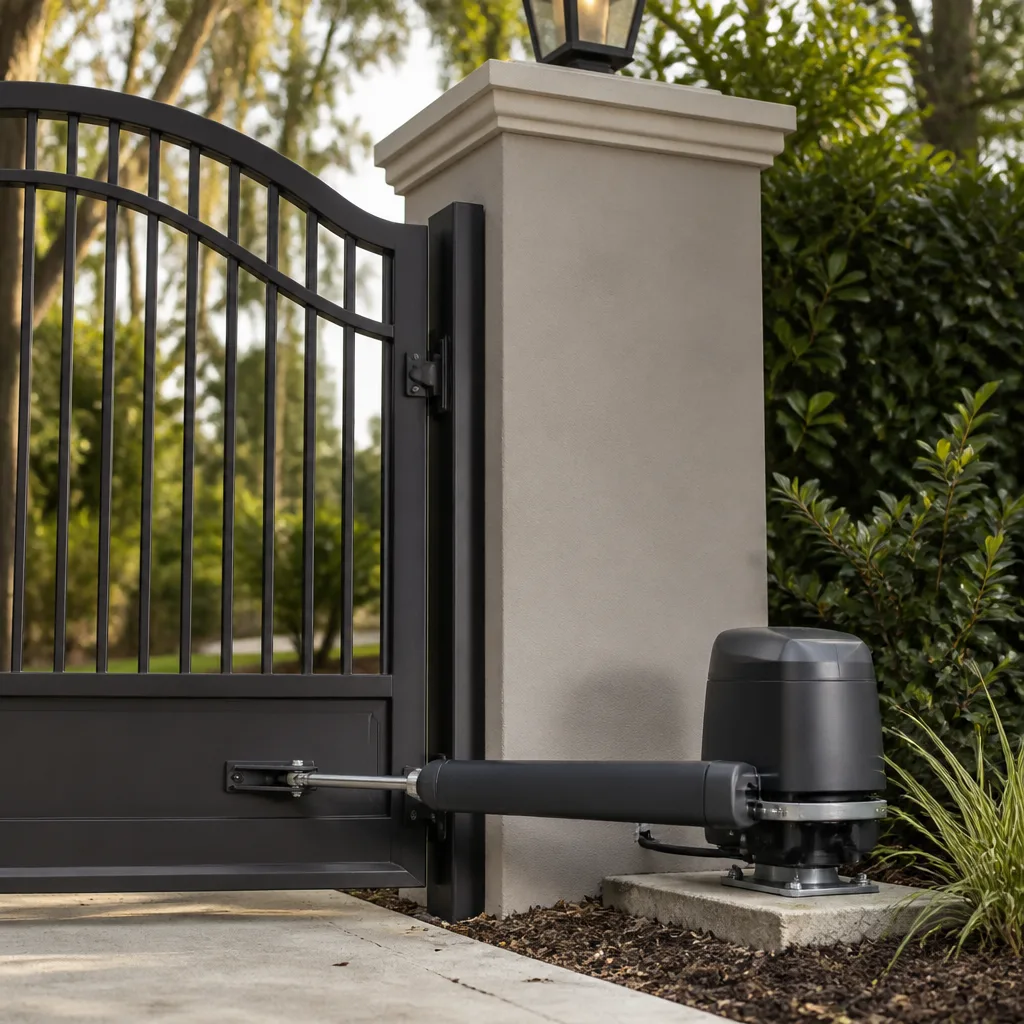
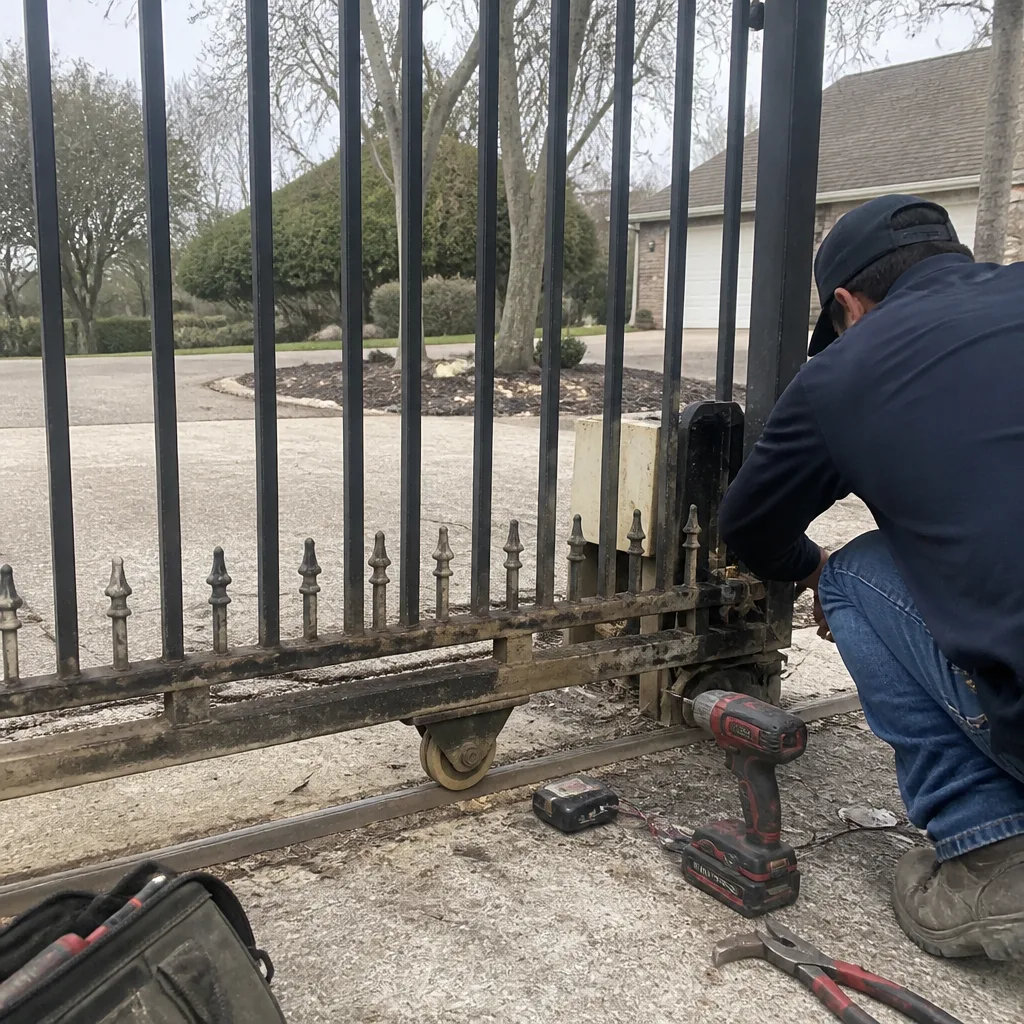 Before
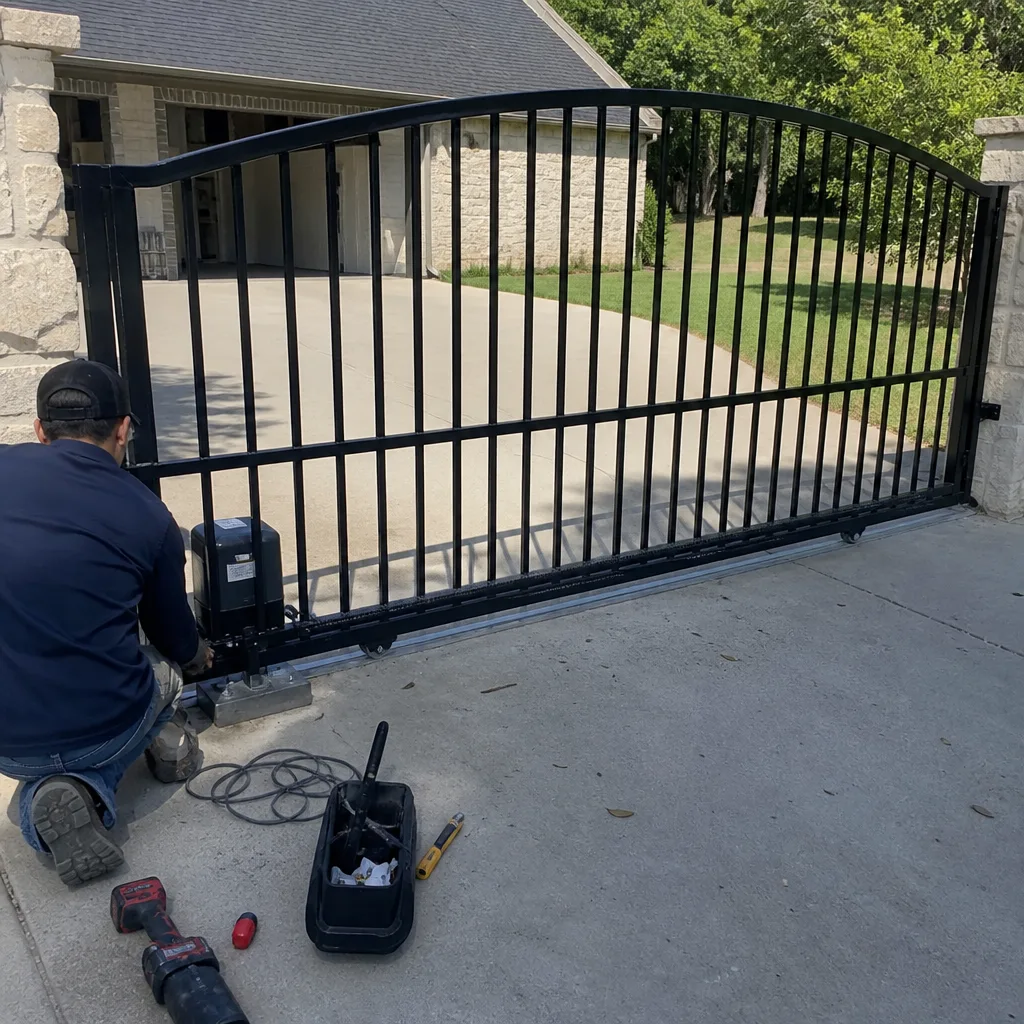 After
After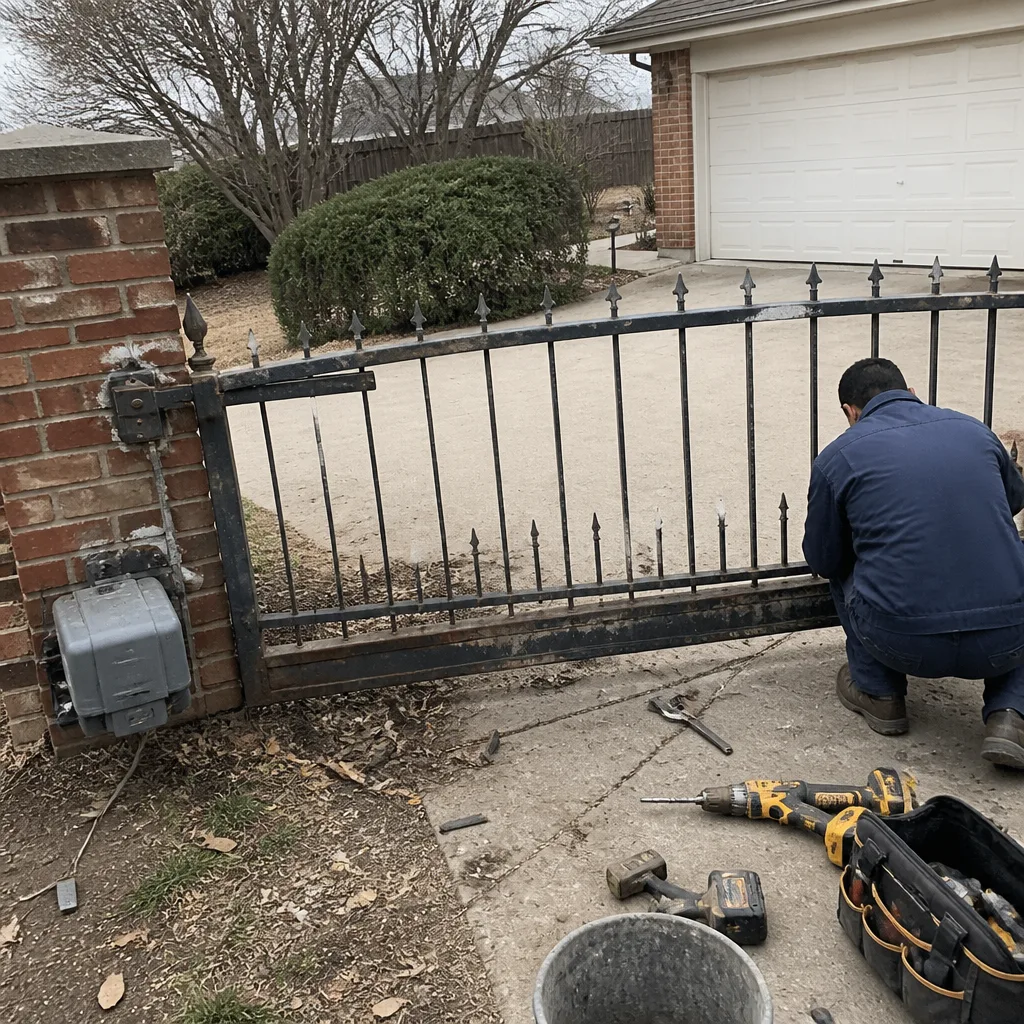 Before
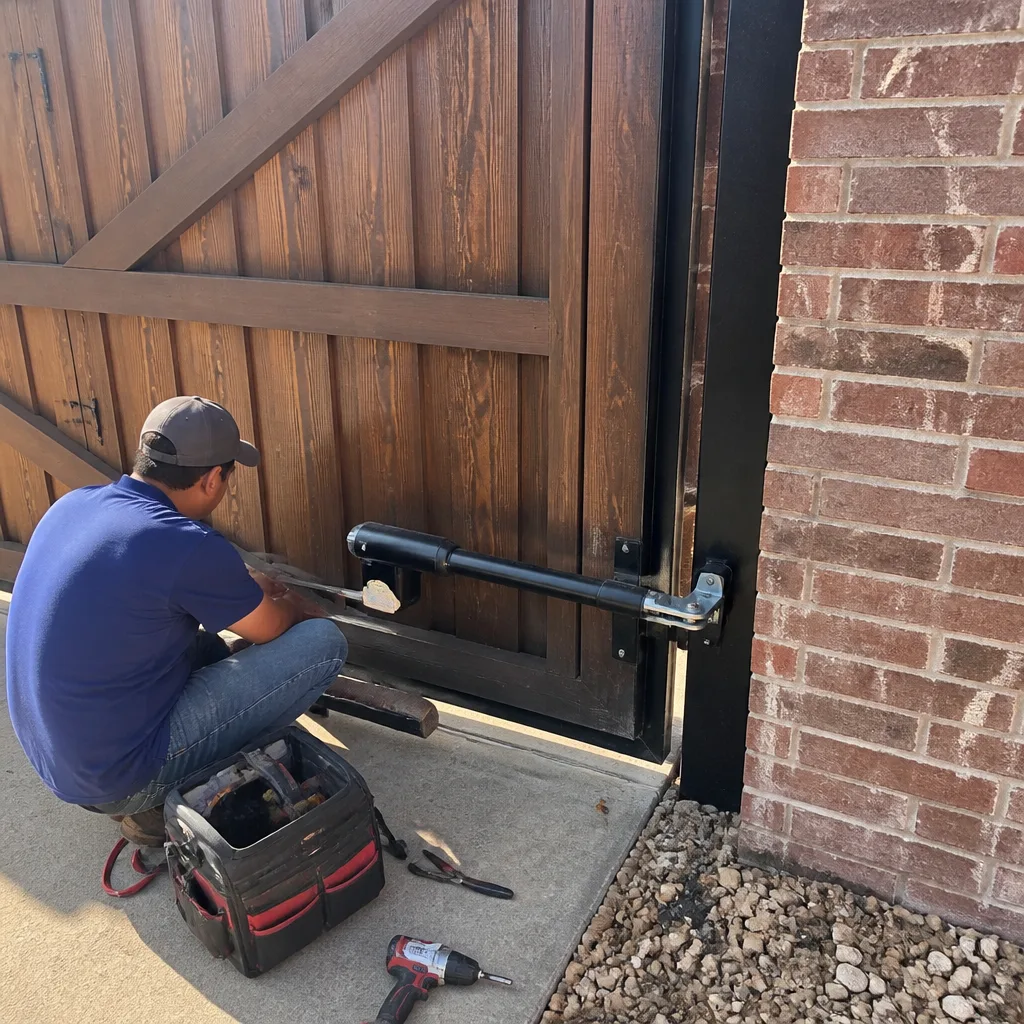 After
After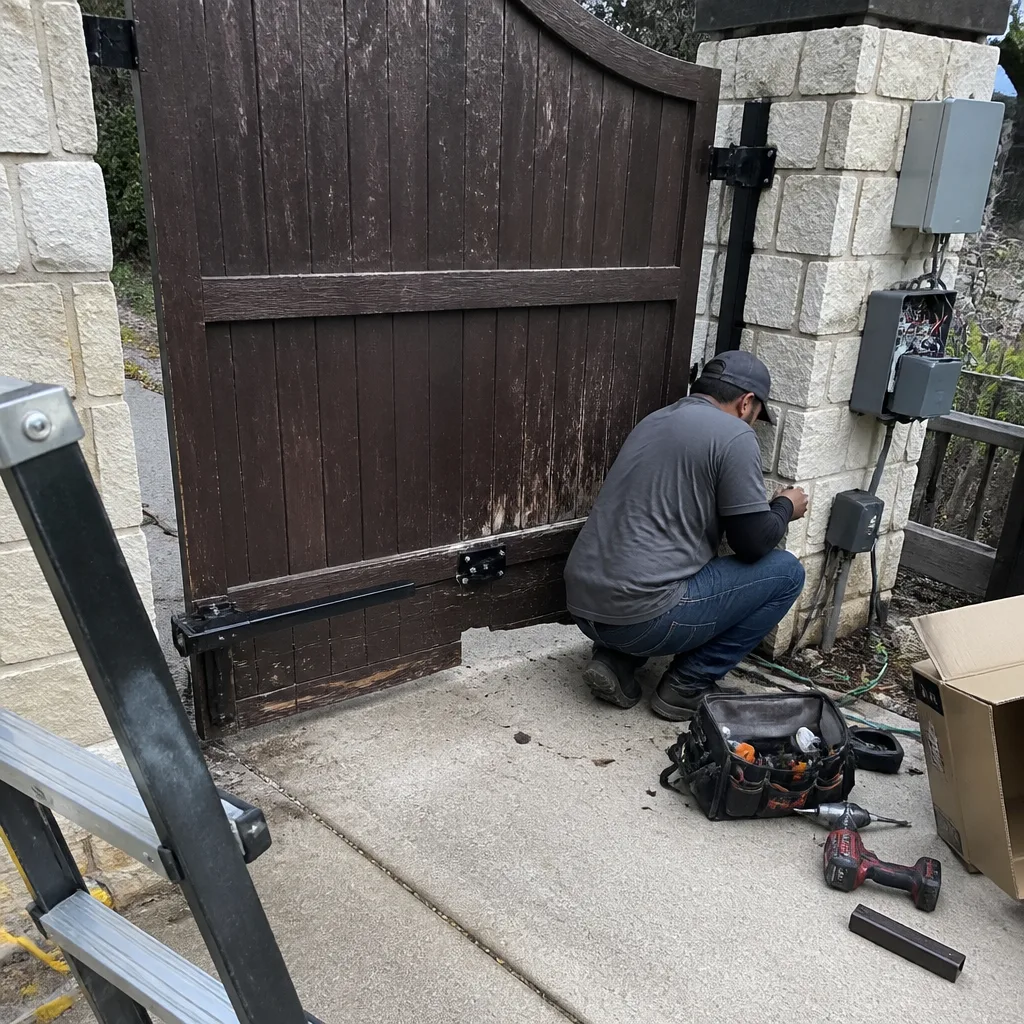 Before
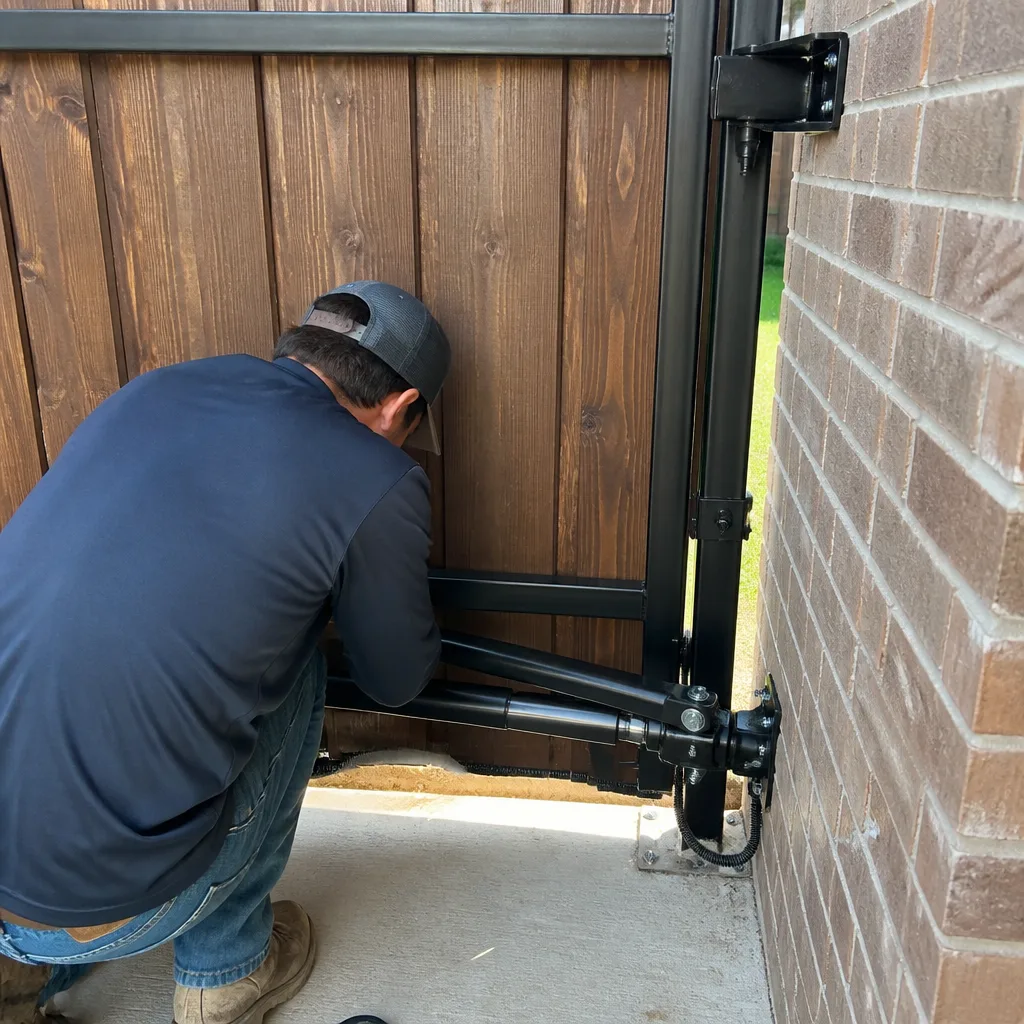 After
AfterGate Repair Permits, Codes & Inspections in TX: What You Need to Know
Most homeowners in Texas don’t realize that the gate at the end of their driveway is legally classified the same way as the fence around their yard. That classification triggers permitting, setback, and safety code requirements that vary not just by city, but sometimes by neighborhood. In Rockwall, we’ve repaired gates that were installed without a permit fifteen years ago, and the homeowner only discovered the issue when they tried to sell the house. This guide walks you through the rules that actually apply to gate repair and replacement across Texas, with specific attention to how Rockwall, Dallas County, and the surrounding metro enforce them, so you can make the decision with your eyes open before you spend a dollar.
Quick Answer
In Texas, gate repair (replacing hinges, welding a broken picket, swapping an opener arm) rarely requires a permit. Gate replacement or new installation usually does, especially if the gate is automated, exceeds a height threshold, sits in a front setback, or is part of an HOA-governed property. Most Texas cities adopt a version of the International Residential Code (IRC) plus their own local amendments. In Rockwall specifically, a building permit is required for any new gate structure, and automated gates must comply with UL 325 safety standards for entrapment protection.
Table of Contents
- When a Gate Repair or Replacement Requires a Permit in Texas
- Rockwall-Specific Gate Codes and Local Amendments
- UL 325 and Automated Gate Safety: The Non-Negotiable Standard
- HOA Rules vs. City Codes: Which One Actually Governs Your Gate
- How Gate Inspections Work in Rockwall and Dallas County
- Setbacks, Easements, and Right-of-Way: Where Your Gate Can Legally Sit
- What Permits and Code Compliance Actually Cost in the Rockwall Market
When a Gate Repair or Replacement Requires a Permit in Texas
Here is the working rule we use on every job in Rockwall and across the metro: if the gate’s footprint, height, or function is changing, assume you need a permit. If you are swapping a hinge, replacing a broken wheel, or repairing a weld, you almost never do. The line gets drawn at the point where the work becomes structural or introduces a motor.
Under the Texas version of the International Residential Code, which almost every municipality in Dallas County adopts with amendments, a permit is triggered when you:
- Install a new gate where none existed before, including a pedestrian gate alongside a driveway gate
- Replace an entire gate assembly, including the posts, when the existing posts are removed or reset
- Add automation to an existing manual gate for the first time
- Change the swing direction of a gate so that it swings over a public sidewalk or into a right-of-way
- Install a gate that will stand taller than 7 feet at its highest point (some cities use 6 feet)
- Build a gate in a front yard setback or within a utility easement
What typically does not require a permit: replacing a rusted hinge in-kind, welding a cracked seam, swapping out a damaged opener arm, installing a new keypad on an existing automated gate, or re-hanging a sagging gate on its existing posts. Rockwall’s building department follows this same practical distinction. In our experience, the city is reasonable: if the work looks like maintenance, they treat it as maintenance. If it looks like new construction, they want the paperwork.
Rockwall-Specific Gate Codes and Local Amendments
Rockwall operates under its own adopted building code, which is based on the International Residential Code with local amendments specific to a city that has grown as fast as this one has. The city’s code enforcement and building inspection departments are housed together at City Hall off Goliad Street, and turnarounds on simple permits are generally faster than in the larger Dallas permitting office.
What Rockwall homeowners should know specifically:
- Front yard gates face the strictest review. Rockwall’s zoning ordinance regulates fence and gate placement in front setbacks and corner lots, where sight lines for drivers matter. A gate that blocks the view of oncoming traffic at an intersection will be flagged during permit review.
- Alley-loaded homes, which are common in neighborhoods like The Shores and older sections near downtown Rockwall, have different setback rules for rear gates. The gate sits at the property’s rear property line, but if that line abuts an alley with utility access, the city may require the gate to swing inward.
- Height limits in Rockwall follow the standard Texas pattern: 7 feet maximum for side and rear yard gates, 4 feet maximum for front yard gates in most residential zoning districts. Exceptions exist for corner lots where the side street frontage is treated as a second front yard.
- Lakefront properties on Lake Ray Hubbard fall under additional shoreline development rules when gates are part of a larger fencing project. The gate itself is minor, but the permit file will reference the lake overlay district.
One Rockwall-specific pattern we see regularly: homes built in the 1990s and early 2000s, during the city’s first big growth wave, often have gates that were installed as part of the original build and grandfathered in. If you repair those gates in-kind, the grandfathering holds. If you replace the entire gate and post assembly, the city requires the new structure to meet current code, which can mean setback changes on older lots that are now non-conforming.
UL 325 and Automated Gate Safety: The Non-Non-Negotiable Standard
If your gate is automated, or if you are adding automation to a manual gate, UL 325 is the federal safety standard that governs it. This is not a Texas-specific code. It applies nationwide. But Texas municipalities enforce it at the inspection level when a permit is pulled for automated gate work.
UL 325 exists because automated gates have killed people, including children. The standard requires every automated gate to include:
- Entrapment protection: a device that stops and reverses the gate when it encounters an obstruction. On a swing gate, this is typically a sensor edge or a current-sensing opener. On a slide gate, it must include physical guards that prevent a hand from entering pinch points.
- Warning signage: permanent, legible signs mounted on both sides of the gate warning that the gate is automatic and can operate without warning.
- Manual disconnect: a way to open the gate by hand when power is out, accessible from outside the gate.
- Photoelectric sensors or contact edges: at least one entrapment protection device in addition to the opener’s built-in current sensing, depending on gate class.
In Rockwall, an automated gate permit triggers an inspection that checks for these items. A gate that fails the UL 325 portion of the inspection gets a correction notice, and the correction is usually minor if the installer followed the opener manufacturer’s installation manual. The brands we service most often in this market, among them LiftMaster, FAAC, DoorKing, and Elite, all include UL 325-compliant installation instructions with their openers. The compliance failure we see most often is a missing warning sign or a sensor edge that was never wired in. On a repair job, we check these items whether the city is inspecting or not. That is the standard.
HOA Rules vs. City Codes: Which One Actually Governs Your Gate
In Rockwall, more than half of the single-family subdivisions are deed-restricted communities with active HOAs. The HOA’s architectural control committee can veto a gate design that the city would happily permit. It works the other way too: a gate that satisfies the HOA may still fail a city inspection on setback or safety grounds.
The practical order of operations is:
- Check your HOA’s declarations and design guidelines first. Some Rockwall HOAs require a specific gate style, material, or color. Others prohibit automated gates in front yards entirely.
- Submit to the HOA’s architectural review committee. This typically takes 10 to 30 days depending on the association.
- Apply for the city permit once HOA approval is in hand. The city will not wait for the HOA, but you want the HOA paper trail before the inspection.
- Complete the work, then pass city inspection. The HOA will likely do its own drive-by after completion.
Communities like The Shores, Chandlers Landing, and others along the lake have particularly detailed gate guidelines because the gates are visible from the street and affect the neighborhood’s uniform appearance. We have worked in HOAs where every driveway gate in the subdivision had to be powder-coated black steel with a specific spear-top picket profile. That level of control is not the city’s doing; it is the deed restrictions. The important thing to understand is that an HOA violation on a gate is often more expensive to unwind than a city code violation, because the HOA can fine you monthly until it is fixed. If you are in a Rockwall HOA, read the rules before you buy a gate.
How Gate Inspections Work in Rockwall and Dallas County
For a gate project that requires a Rockwall permit, the inspection process is straightforward. Here is the typical sequence, in the order it actually happens:
- Permit application submitted to the City of Rockwall Building Inspections division, typically online through the city’s citizen portal. You will need a site plan showing the gate location relative to property lines and any easements.
- Plan review, which for a simple gate permit usually takes 3 to 7 business days. The reviewer checks setback compliance, height, and for automated gates, the UL 325 safety specification.
- Footing inspection, if the gate posts are being set in concrete. The inspector verifies post depth and footing diameter before concrete is poured.
- Final inspection, after the gate is hung and the opener (if any) is wired and programmed. The inspector tests the entrapment protection devices, verifies the warning signage, and confirms the gate operates within its intended arc without striking structures or intruding onto public property.
What trips up final inspections in Rockwall, in our experience, is rarely the gate itself. It is the small things: a missing UL 325 warning sign, a sensor edge that is mounted but not connected to the opener’s safety input, or a gate that swings a foot over the property line because the original survey stake was lost. Those are all correctable on the spot, which is why a good gate company sends a technician who is prepared to make the correction during the inspection window. Across Dallas County, the inspection culture varies. Cities like Garland, Mesquite, and Rowlett all inspect gate work differently in terms of rigidity. Rockwall falls in the middle: thorough on safety, practical on cosmetic details.
Setbacks, Easements, and Right-of-Way: Where Your Gate Can Legally Sit
The most common gate code violation in Texas has nothing to do with the gate itself. It is where the gate sits. Setbacks and easements determine whether your gate is legal before the first bolt is tightened.
Here is what governs gate placement in Rockwall:
- Front yard setbacks: In most Rockwall residential zones, a gate may not be placed in the front yard setback area unless it is an open, decorative gate that does not obstruct the view of the home. A solid privacy gate in the front setback is usually rejected.
- Utility easements: A 10-foot drainage or utility easement runs through many Rockwall lots, especially in newer subdivisions. You cannot place permanent structures, including gate posts set in concrete, inside a recorded utility easement without a variance. The city’s public works department reviews this during permit review.
- Corner lots: Rockwall enforces a sight triangle at intersections. If your gate is on the side street of a corner lot, it must be set back far enough that a stopped driver can see approaching traffic. This often means the gate sits further back than a fence on the same lot line would.
- Right-of-way: A gate that swings outward over a public sidewalk is not allowed in Rockwall, period. The gate must swing inward onto private property or be a slide gate that runs parallel to the fence line within the property boundary.
If your gate posts are already set and the gate has been in place for a decade, an in-kind repair does not reopen the setback question. But if you are moving the gate, widening the opening, or changing the swing, the city reviews the placement against current rules, not the rules from when the gate was first installed. That is how a simple “let’s make the gate wider” project turns into a variance request. We have walked homeowners through Rockwall variance hearings for gate setbacks, and the city board is generally reasonable when the request is modest and the neighbor does not object. But a variance adds 30 to 60 days to the project timeline.
What Permits and Code Compliance Actually Cost in the Rockwall Market
Permit fees in Rockwall for a residential gate project are modest compared to the cost of the gate itself. A simple gate permit runs between $50 and $150 depending on the project valuation. Reinspection fees, if you fail an inspection and need a second visit, are typically around $35 to $75. The larger cost comes from compliance work: if the gate has to be relocated for setback reasons, if a new UL 325 sensor package has to be added to an older opener, or if the HOA requires a specific material that costs more than you planned.
Here is a realistic cost picture for a Rockwall homeowner:
- City permit: $50 to $150
- UL 325 safety package (sensor edge, warning signs, photoelectric sensor for an automated gate): $150 to $400 installed
- Setback correction or variance, if required: $0 in city fees for the hearing itself, but survey and drawing costs run $400 to $900
- HOA submission and review: usually free or under $50, but non-compliance fines can run $25 to $250 per month until corrected
- Full gate replacement with automation, parts and labor: $3,500 to $12,000 in the current Rockwall market, depending on gate size, material, and opener brand
None of these numbers surprise anyone who has pulled a fence permit in Texas. They are the cost of doing the job the way the city and your neighbors expect. The expensive mistake is skipping the permit, selling the house in five years, and having the buyer’s inspector flag the unpermitted gate during the option period. At that point, you are either paying for a retroactive permit, which Rockwall does allow in some cases, or you are redoing work that was never inspected. We always quote the permit line item separately so the homeowner sees exactly what the city is charging. That is the square deal.
Common Mistakes to Avoid
- Skipping the permit entirely because “it’s just a gate.” Rockwall code enforcement does not do weekly sweeps looking for unpermitted gates, but the issue surfaces at resale, during an HOA complaint, or when a neighbor disputes the property line. The retroactive fix costs more than the original permit.
- Assuming the HOA and the city set the same rules. They do not. A gate can pass HOA review and fail city inspection on safety, or pass city inspection and violate the HOA’s design standards. Both approvals need to happen.
- Ignoring UL 325 on an automated gate repair. Replacing an opener on an existing automated gate triggers the requirement to bring the whole gate up to current safety standards in most inspections. If the old sensor edges are worn out, they are part of the repair, not an optional add-on.
- Letting the gate swing over the sidewalk. This is the most common self-install mistake we correct in Rockwall. Outward-swinging gates over a public sidewalk are a pedestrian hazard and will not pass inspection.
- Setting posts inside a utility easement. The city’s permit review will catch this if you pull a permit. If you skip the permit, the utility company can legally remove your gate posts during a line repair and not pay to replace them.
- Buying a gate kit online without checking local wind load. Rockwall sits in a region that sees occasional straight-line winds and the risk of severe storms out of the west. Lightweight aluminum gates from national retailers are not always sized for the wind exposure of a lakefront lot on Lake Ray Hubbard. The code requirement for wind load applies to fences and gates as accessory structures.
- Waiting to check the HOA until after the gate is ordered. Custom gates have a long lead time. If the HOA rejects your design and the gate is already fabricated, you own a very expensive piece of metal with nowhere to hang it.
When to Call a Professional
Some gate work genuinely is DIY territory: lubricating hinges, tightening bolts, replacing a keypad battery. Permitting work is usually not. If your gate project requires a city permit, a UL 325 inspection, an HOA submission, or a setback variance, you want someone who has sat in front of the Rockwall building inspector and knows what gets flagged. A state-licensed gate specialist can also identify whether the existing gate can be repaired in-kind or whether the city will treat it as new construction. If you are unsure whether your project needs a permit, call the Rockwall building department and ask, or call the Ironworks Gate Co. home team and we will tell you honestly. Ironworks Gate Co. offers free estimates in Rockwall. Call (936) 715-3043 and a live person answers, day or night.
Frequently Asked Questions
In most cases, no. Replacing hinges, welding cracks, adjusting a sagging gate, or swapping an opener arm are repair items that do not require a Rockwall permit. If the repair involves replacing the posts, changing the gate’s swing direction, or adding automation to a manual gate, a permit is generally required. Call (936) 715-3043 if you want a straight answer on your specific repair before you start.
UL 325 is the national safety standard for automatic gates. It requires entrapment protection devices, warning signs, and a manual release mechanism on every automated gate. Texas cities, including Rockwall, enforce UL 325 compliance when a gate project is inspected. If your opener is older and lacks a sensor edge or photoelectric sensor, bringing it into compliance typically costs $150 to $400.
A residential gate permit in Rockwall typically costs between $50 and $150, depending on the project valuation and whether the gate is automated. Reinspection fees, if needed, run $35 to $75. Larger costs come from compliance work like sensor upgrades or setback corrections, not from the permit itself.
Yes. In Rockwall, many subdivisions are deed-restricted, and the HOA’s architectural review committee has the authority to reject a gate design, material, or automation plan regardless of what the city permits. If you live in an HOA-governed neighborhood, get HOA approval before ordering the gate. The Ironworks Gate Co. home team has worked with most major Rockwall HOAs and can walk you through the specific requirements.
The buyer’s inspector may flag the unpermitted gate during the option period, and at that point you either pay for a retroactive permit and any corrections the city requires, or you negotiate the repair with the buyer. Rockwall does process retroactive permits in some situations, but the inspection holds the gate to current code, not the code from when it was installed. The retroactive path usually costs more than the original permit would have.
Yes. Gates are accessory structures under the Texas building code, and that code includes wind load requirements that affect gate bracing, post sizing, and opener selection. In Rockwall, where lakefront lots on Lake Ray Hubbard see stronger wind exposure than inland lots, an underbuilt gate can fail in a storm. Our gate evaluations in Rockwall always account for the specific wind exposure of your lot. For an exact assessment, call (936) 715-3043.
The Bottom Line
Gate repair in Texas is usually a no-permit, same-day job. Gate replacement and new installation are not, and the difference comes down to structure, automation, setback, and your HOA. In Rockwall, the city’s building inspection process is fast and practical, but you have to follow the sequence: HOA first, city permit second, inspection last. UL 325 safety compliance on automated gates is non-negotiable, and a gate that has been working for twenty years may not meet the current standard. The safe play in every situation is to ask before you weld. Call (936) 715-3043 or visit the Ironworks Gate Co. home page and get an honest answer about whether your project needs a permit. The estimate is free, and so is the straight talk.
Written by Victor Salinas, Owner at Ironworks Gate Co., serving Rockwall since 2013.