
Quick Summary
When sliding driveway gates sag, grind, or bind mid-cycle, effective gate chain repair requires diagnosing underlying mechanical faults like leaning support posts and seized guide rollers rather than simply overtightening tension bolts. Ironworks Gate Co. delivers reliable gate chain repair by pairing precise ANSI chain replacement and tensioning with structural roller alignment and operator motor diagnostics to prevent recurring gearbox failures. Property owners will understand the critical causes of drive assembly wear and can contact Ironworks Gate Co. to schedule a free on-site gate assessment or request same-day emergency service.
Gate Chain Repair: Symptoms, Causes, and Maintenance
When an automatic sliding gate starts jerking, grinding, or stops moving altogether, gate chain repair is often the first thing property owners look into. However, chain slack or breakage is rarely an isolated problem. Simply cranking down on the tension bolts to pull out the sag often causes more damage than good. As technicians at Ironworks Gate Co. often point out, in many driveway systems, a loose or broken chain is the symptom of an underlying mechanical issue, such as misaligned sprockets, worn guide rollers, or posts shifted by expansive clay soil.[3]
Hardware failures on automated sliding gates carry real safety and property risks. According to U.S. Consumer Product Safety Commission (CPSC) data on gate incidents, hardware failures such as broken hinges, broken or misaligned locks/latches, and mounting hardware failures account for roughly 38% of reported mechanical problems. ASTM International also emphasizes that derailing or falling gates can cause severe physical injury. Addressing root causes early protects your motor and keeps your entry secure.[1] See also Automatic Gate Repair Rockwall – Call Now-10% Off – On-Site in 60 Minutes – Free Estimate.
Gate Chain Repair: Symptoms, Causes, and Mechanical Diagnostics
If an automatic sliding gate chain sags toward the driveway, jumps the drive gear, or snaps under load, the whole drive assembly needs an evaluation. An inspection checks chain pitch stretch, sprocket tooth wear, roller resistance, and operator mounting geometry.
When a support post leans, the chain bracket on the gate leaf can fall out of parallel alignment with the drive sprocket on the operator. Tightening the chain without correcting that tilt forces the roller links to ride hard against the outer edge of the teeth, accelerating metal wear and placing strain on the motor.
Common Warning Signs of Chain and Sprocket Failure
Slide gate drive assemblies usually give clear warning signs before failing entirely:
- Excessive chain sag: The roller chain droops significantly or drags across the driveway.
- Metal popping or grinding: Worn sprocket teeth catch on stretched chain links as the gate cycles open and closed.
- Shuddering or jerky travel: The gate stutters along the track due to binding chain links or seized guide rollers.
- Motor runs but gate stays still: The operator motor spins, but a broken roller chain or stripped drive sprocket leaves the gate stationary.
Immediate Action Steps When a Driveway Gate Fails
If your chain snaps, jumps the track, or binds mid-cycle, take these immediate precautions:
- Cut power and disengage the drive: Turn off the main breaker or disconnect the operator switch, then use the manual release key. This prevents the motor from suddenly firing and damaging the drive assembly.
- Check the physical track and guide rollers: Inspect the ground track for rock obstructions, bent rail sections, or seized top rollers before adjusting the chain.
- Avoid over-tensioning: Do not use excessive force to pull the chain drum-tight. Sliding gate roller chains require proper slack without binding, consistent with the operator manual, to protect internal gearbox components.
Why Sliding Gate Chains Sag, Slip, or Snap Under Load
When rolling resistance increases because of worn cantilever rollers, debris in the track, or an unlevel gate leaf, the motor must exert more force. That extra mechanical resistance can accelerate wear on chain pins, wear down sprocket teeth, and lead to chain failure.
The Danger of Overtightening a Sagging Gate Chain
A common mistake in slide gate maintenance is overtightening a sagging chain. When all-thread tension bolts are tightened until the chain is rigid, it introduces side loads on the operator output shaft.
Slide gate operators are engineered to pull parallel loads rather than carry heavy sideways tension. Excessive chain tension can place continuous lateral force on gearbox bearings, potentially damaging seals, wearing down gears, and straining the motor. Chain tension should be adjusted to maintain proper slack without binding, consistent with the operator manual.
How Post and Foundation Movement Causes Sprocket Misalignment
Ground movement can be a contributing cause of chain failure. In areas with expansive clay soil, wet and dry seasonal cycles can shift concrete gate post footings.
When a post tilts, the chain brackets mounted on the gate frame can move out of alignment with the drive sprocket on the motor. This offset causes the chain to enter the sprocket at an angle, forcing the rollers against the sides of the sprocket teeth and increasing the risk of derailment or breakage.
Slide Gate Chain Replacement vs. Link Repair
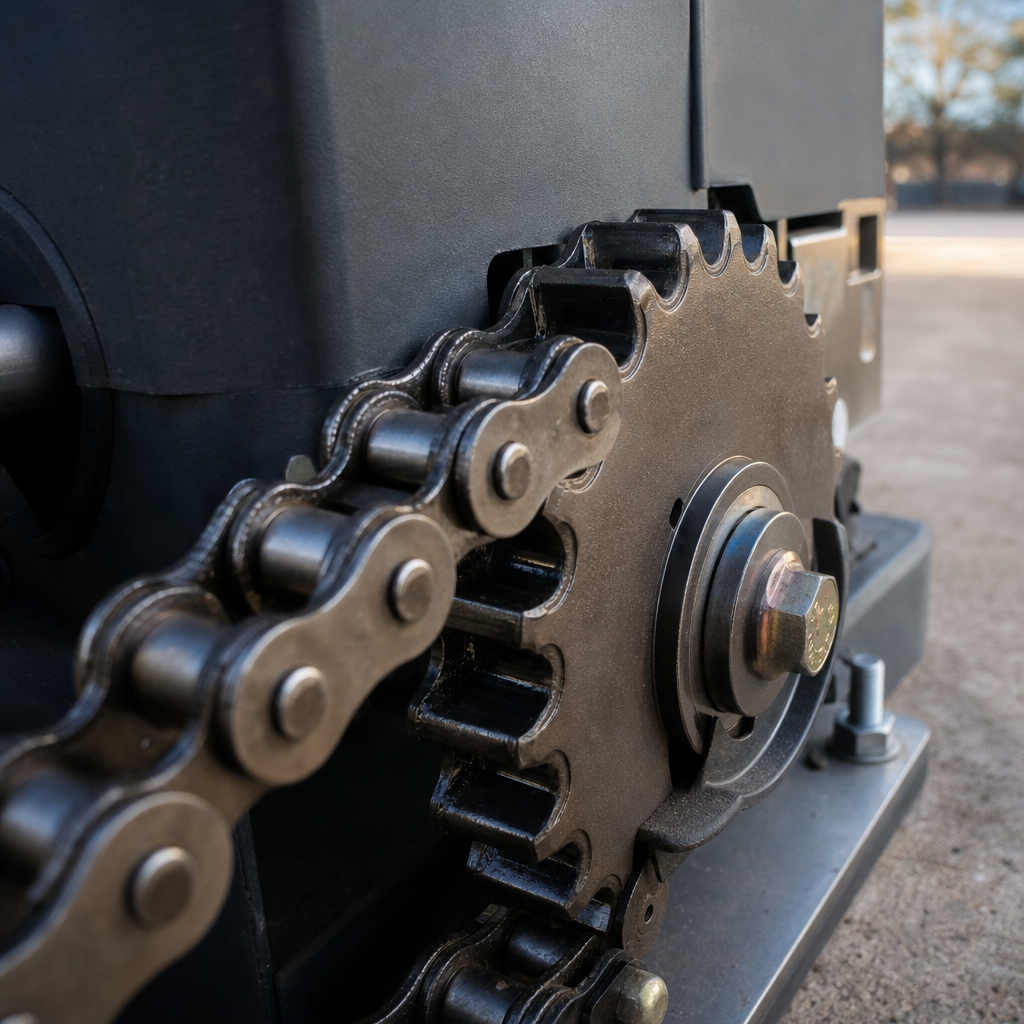
Deciding between splicing a master link and replacing the entire chain run depends on the condition of the hardware and the extent of chain wear.
Standard Roller Chain Sizes
#40 and #41 are commonly used ANSI roller chains for automatic sliding gates.
When to Splice a Master Link vs. Installing a Full Chain Run
If a chain breaks due to an isolated impact or a temporary obstruction, splicing in a new master link or a short section of chain can be an effective repair. However, if the chain has elongated significantly from wear, splicing a single link serves only as a temporary fix.[5]
Worn chains no longer seat properly on standard sprockets. Installing a new chain on worn sprockets, or putting a new master link on an elongated chain, can cause accelerated wear and noisy operation. When replacing an aged chain, Ironworks Gate Co. recommends inspecting the drive and idler sprockets to determine if they should be replaced as well.
| Feature | Master Link Splice | Full Chain Replacement | Complete Drive Realignment |
|---|---|---|---|
| Wear Condition | Isolated break from sudden impact | Widespread link wear or heavy rust | Foundation shift, leaning posts, or bent brackets |
| Sprocket Condition | Sprocket teeth remain symmetrical | Sprockets show hook-wear and need replacement | Sprocket, idler wheels, and mounting plate need realignment |
| Scope of Work | Quick repair, minimal hardware | New chain run and matched sprockets | Re-plumbing posts, adjusting operator height, and tensioning |
Slide Gate Operator Maintenance Considerations
Routine care for operators keeps mechanical loads balanced and helps prevent unexpected breakdowns, protecting the motor and ensuring reliable operation.
Protecting Operator Gearboxes During Chain Tensioning
Whenever chain tension is adjusted, check the operator drive clutch and limit switches. If the chain is adjusted without verifying the open and close limits, the gate may contact the physical post stops before reaching the limit switch, placing unnecessary stress on the chain brackets and drive train.
General Operator Care and Lubrication
Proper lubrication supports longer chain service life:
- Avoid heavy grease or motor oil: Heavy lubricants can collect road dust, lawn clippings, and sand, forming an abrasive paste that accelerates roller wear.
- Use dry-film lubricants: Apply a dry PTFE, silicone, or specialized chain spray periodically to lubricate internal pins without attracting dirt.
- Check idler pulleys: Ensure idler guide wheels spin freely and show no signs of bearing seizure.
Factors That Influence Gate Chain Repair Costs
Repair and replacement costs vary by chain type, length, and whether sprockets or operator parts also need replacement. In addition, specialists at Ironworks Gate Co. note that labor costs can depend on whether underlying structural issues, such as misaligned posts or seized guide rollers, must be corrected.
Repair Scope Overview
| Service Type | Scope of Work | Cost Factors |
|---|---|---|
| Link Splicing and Tensioning | Replacing damaged master links, setting proper slack, and checking travel limits. | Varies by chain size, gate accessibility, and labor time. |
| Full Chain and Sprocket Replacement | Installing a new chain run, drive sprockets, idler wheels, and setting proper tension. | Varies by chain type, total length, and sprocket specifications. |
| Structural Realignment and Rollers | Correcting post plumb, replacing guide rollers, and remounting the operator base. | Varies by extent of ground movement and required hardware repairs. |
Frequently Asked Questions About Driveway Gate Chain Repair
How much does it cost to repair or replace a sliding gate chain?
Costs vary by chain type, length, and whether sprockets or operator parts also need replacement. Additional labor and hardware expenses may apply if post realignment, roller replacement, or operator adjustments are required.
How do I tighten a loose automatic gate chain?
Chain tension should be adjusted to maintain proper slack without binding, consistent with the operator manual. Adjust the tension bolts evenly on the mounting brackets and verify that the chain moves smoothly without exerting excess radial load on the operator output shaft.
Why does my driveway gate chain keep slipping off the sprocket?
Chain slippage commonly occurs due to excessive chain elongation, worn sprocket teeth, or bracket misalignment. If soil movement or physical impact tilts the gate post or operator pad, the chain can enter the sprocket at an angle and ride off the teeth.
What size roller chain is used for automatic sliding gates?
#40 and #41 are commonly used ANSI roller chains for automatic sliding gates.
Can I repair a broken gate chain link myself or should I hire a professional?
Replacing an isolated broken master link can be done with basic hand tools. However, if the chain broke due to structural shifting, seized rollers, or misalignment, repairing only the link may result in repeated failures. A qualified technician can inspect the drive assembly, align the components, and verify that safety reversal systems operate correctly.[4]
How often should gate opener chains be lubricated and maintained?
Inspect and lubricate the chain every 3 to 6 months. Use a dry PTFE or silicone-based spray rather than heavy grease to avoid attracting debris. During inspections, Ironworks Gate Co. suggests checking idler pulleys and ensuring chain tension maintains proper slack without binding throughout seasonal temperature shifts.[2]
Sources
- AB 2149 (Connolly) – sjud.senate.ca.gov (2026)
- Baby gate-related injuries among children in the United … – pubmed.ncbi.nlm.nih.gov (2014)
- Final Rule – Safety Standard for Gates and Enclosures – CPSC – cpsc.gov
- [PDF] Proposed Rule: Safety Standard for Gates and Enclosures – cpsc.gov
- New Study Finds Number of Children Treated in U.S. Emergency … – nationwidechildrens.org (2010)
Related reading: Commercial Gate Repair | Call Now-10% Off | On-Site in 60 Minutes | Free Estimate
Related reading: Gate Motor Repair | Call Now-10% Off | On-Site in 60 Minutes | Free Estimate
Related reading: Gate Welding Repair – 10% Off & Free Estimate – On-Site in 60 Minutes
Frequently Asked Questions
How does a damaged or improperly tensioned chain lead to gate motor gearbox failure?
An overtightened chain exerts intense lateral force on the operator output shaft, which ruins internal oil seals, damages bearings, and strips gearbox gears over time. Ironworks Gate Co. pairs chain tensioning with full motor diagnostics to protect internal drive components and ensure smooth operation. Property owners facing sudden motor strain can contact Ironworks Gate Co. for same-day emergency gate chain repair.
How do technicians determine if gate chain issues stem from foundation or post movement?
Technicians assess whether the gate leaf chain brackets remain parallel with the operator drive sprocket, checking for angular entry caused by shifting soil or leaning support posts. Ironworks Gate Co. offers a free on-site gate assessment to check post plumb, track level, and guide roller resistance before replacing worn drive hardware.
Can I replace a worn slide gate chain without replacing the drive and idler sprockets?
Installing a new roller chain over worn, hooked sprockets causes the new links to slip, grind, and stretch prematurely. Ironworks Gate Co. evaluates the entire drive assembly to determine if sprockets, idler wheels, and mounting brackets need matched replacement alongside ANSI chain installation.
About the author
 |
Megan Sullivan Megan Sullivan is a technical writer specializing in property maintenance and access control systems, with over six years of experience in the home services sector. She holds a B.A. in Technical Communication from the University of North Texas and focuses on providing clear, practical advice on gate repair and pricing for Texas homeowners. Her work emphasizes transparent solutions and preventive maintenance strategies. |
Gate not opening, off track, or opener dead?
We’re available now - call for a fast, free estimate.
Call Now - Free Estimate