
Last updated August 25, 2026
Free on-site gate assessment - hinges, posts, and your LiftMaster or Nice gate operator checked before anything is quoted
The assessment is free and the quote is the invoice.
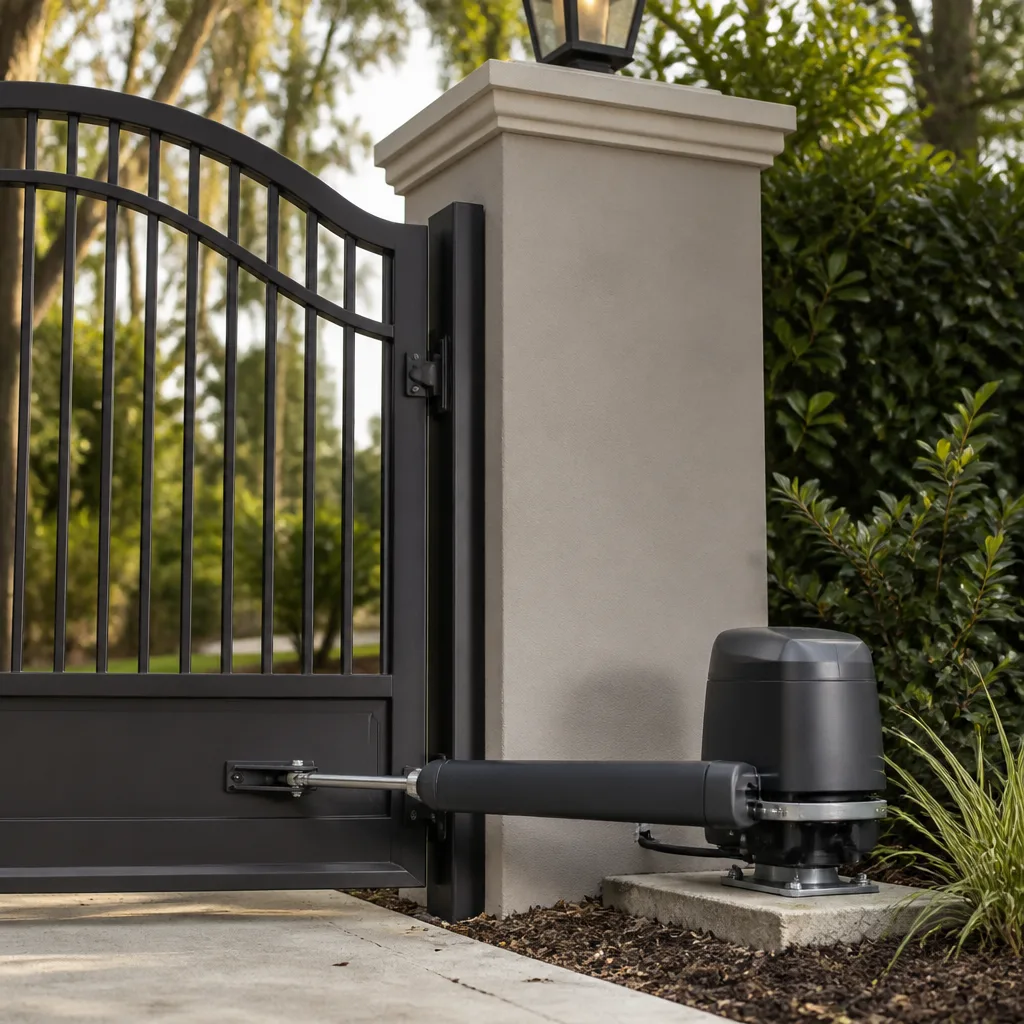
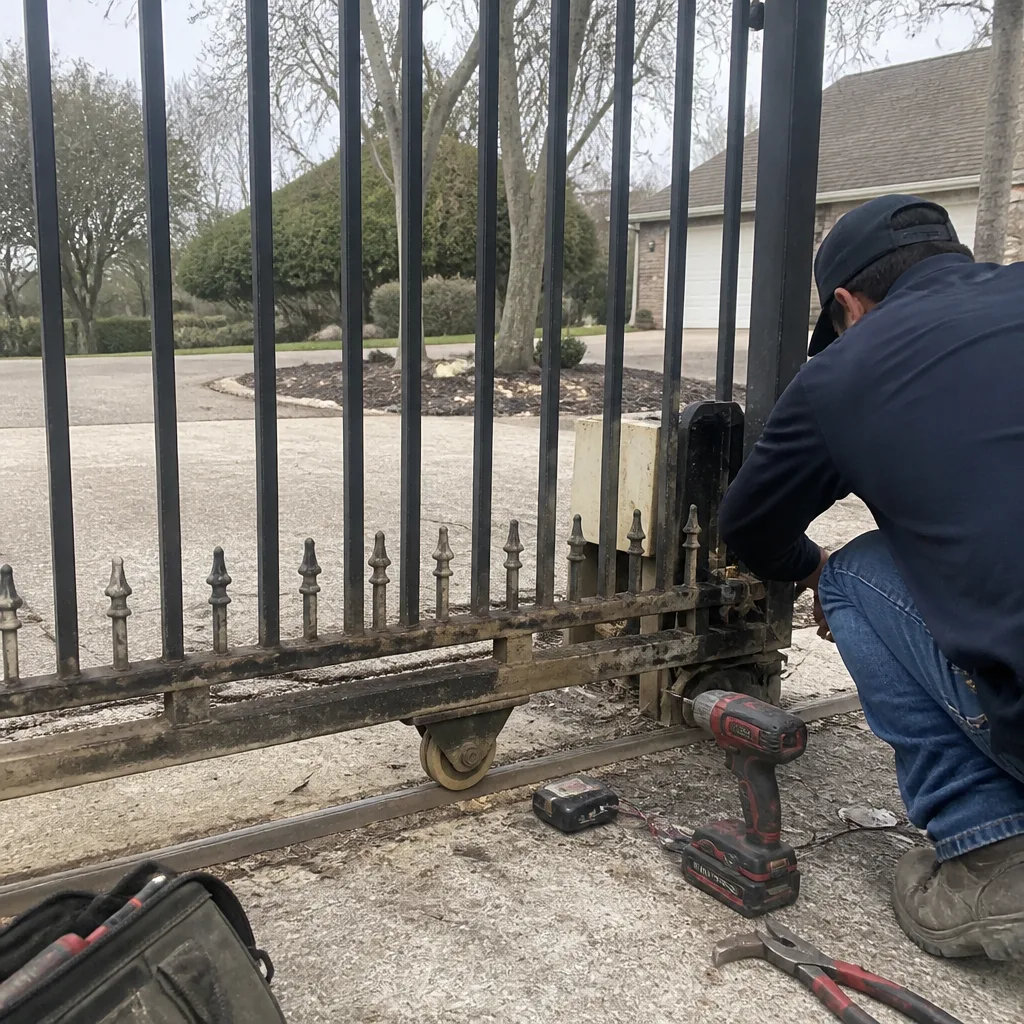 Before
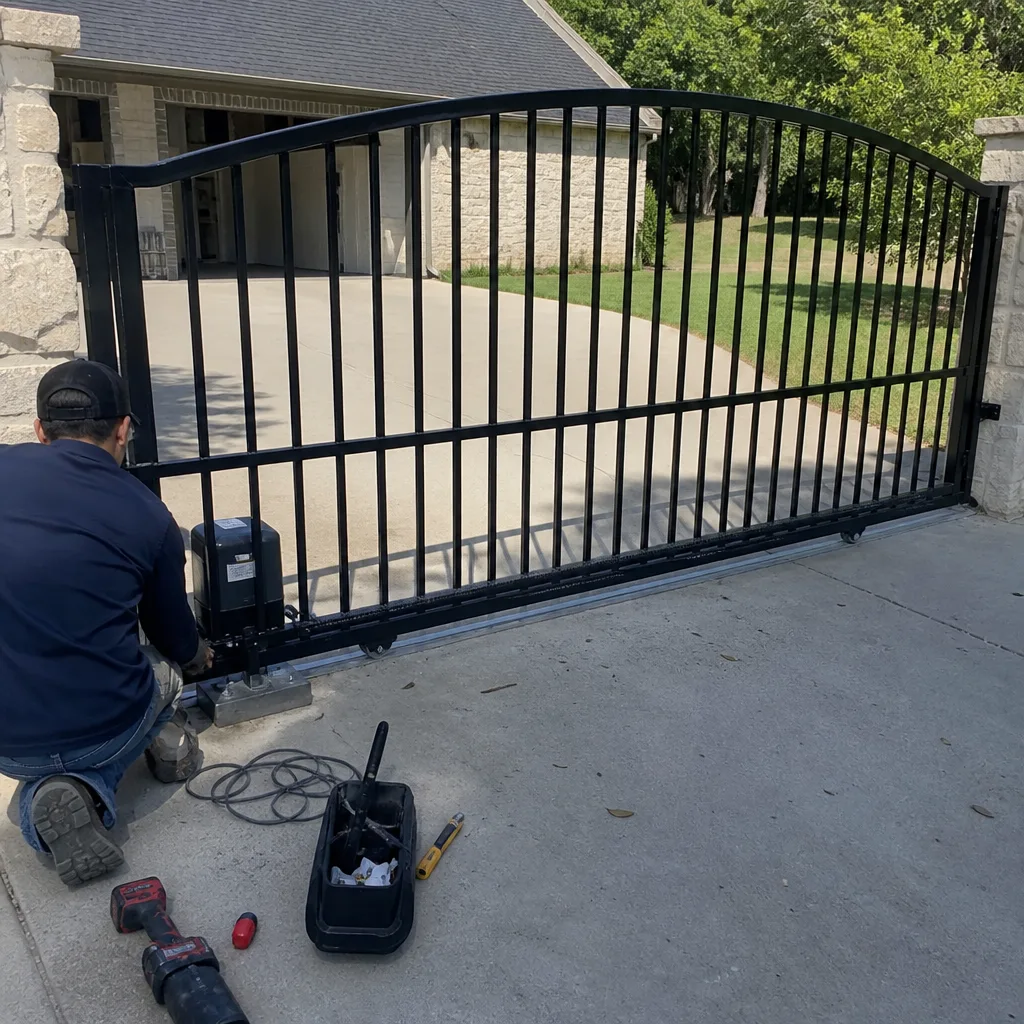 After
After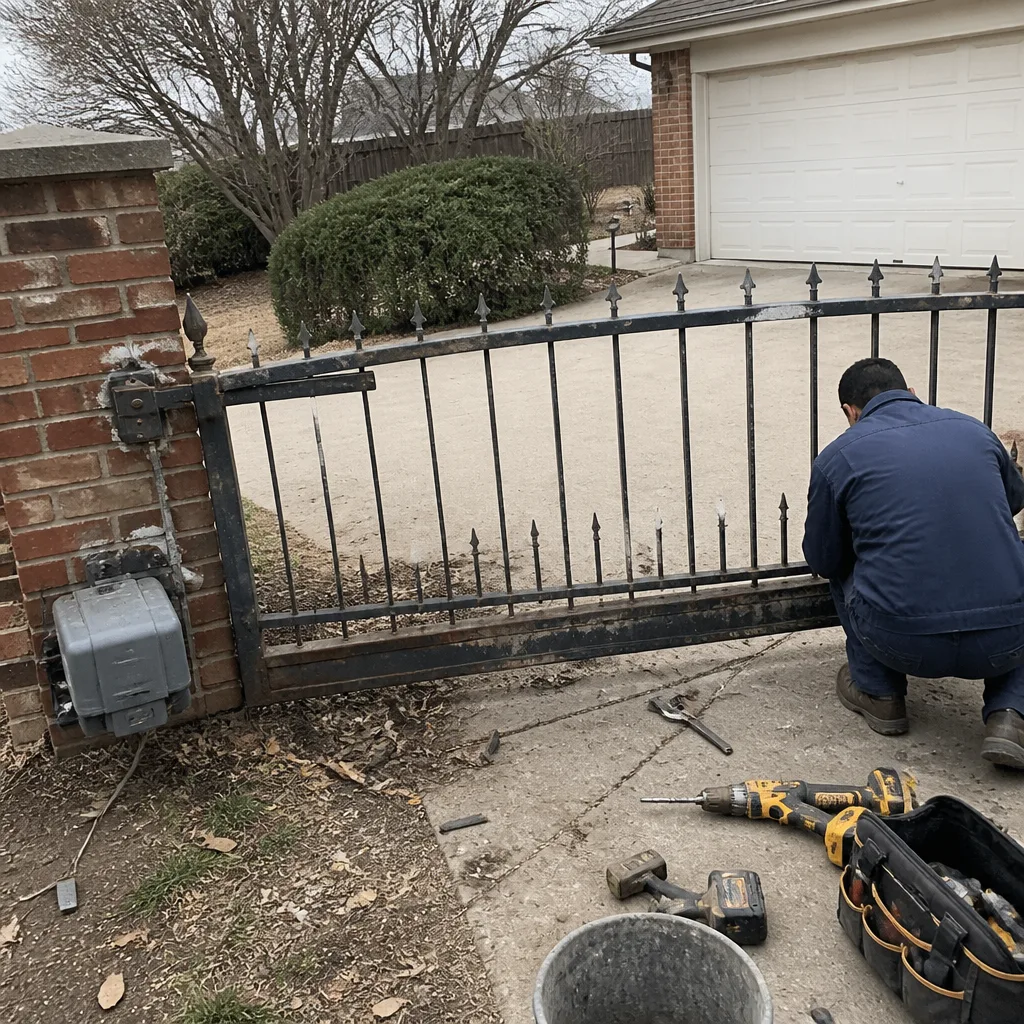 Before
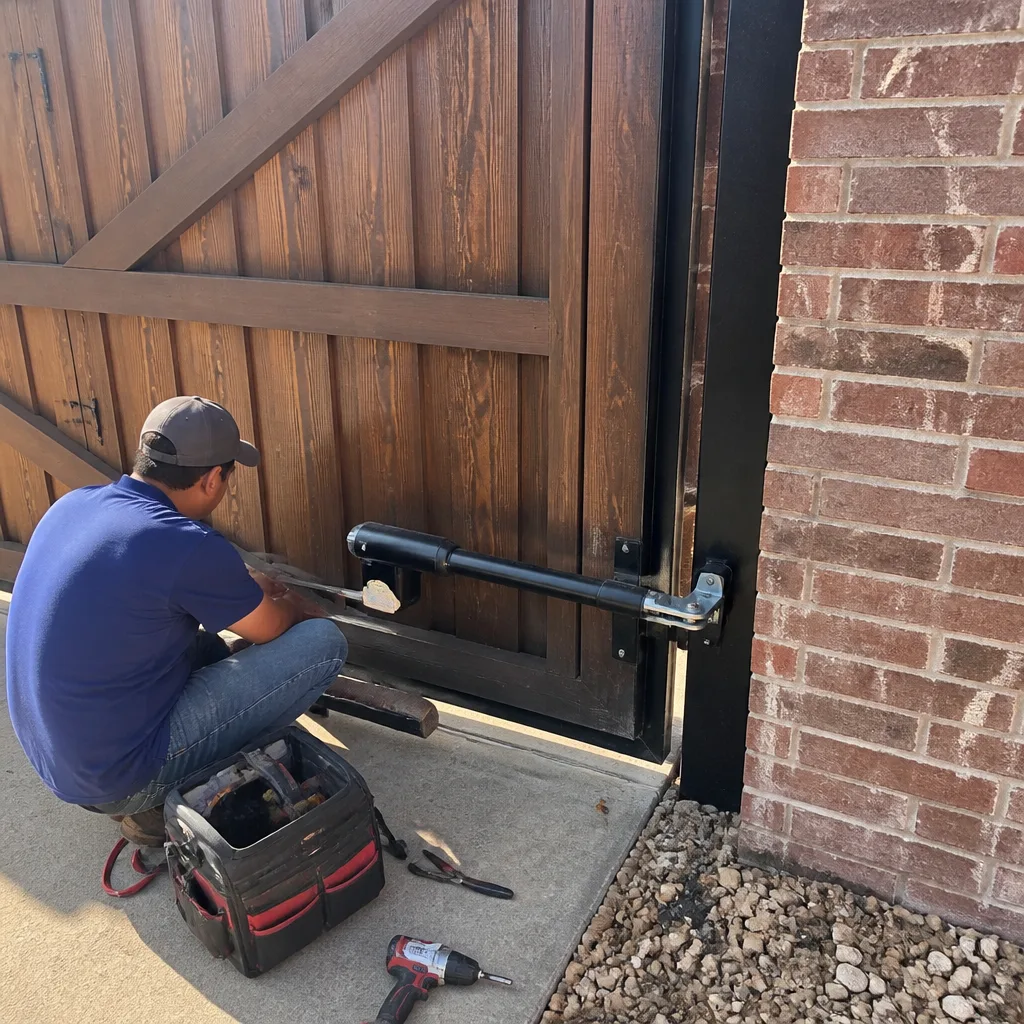 After
After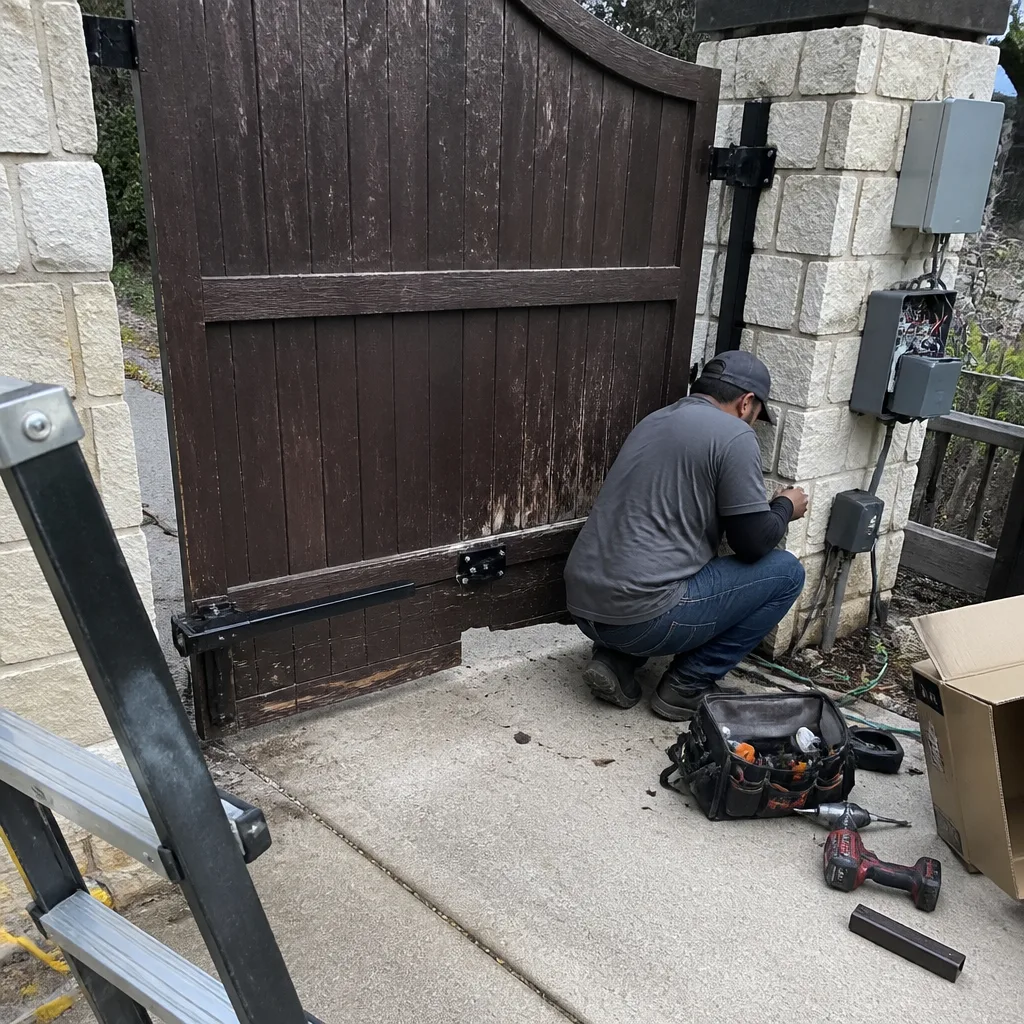 Before
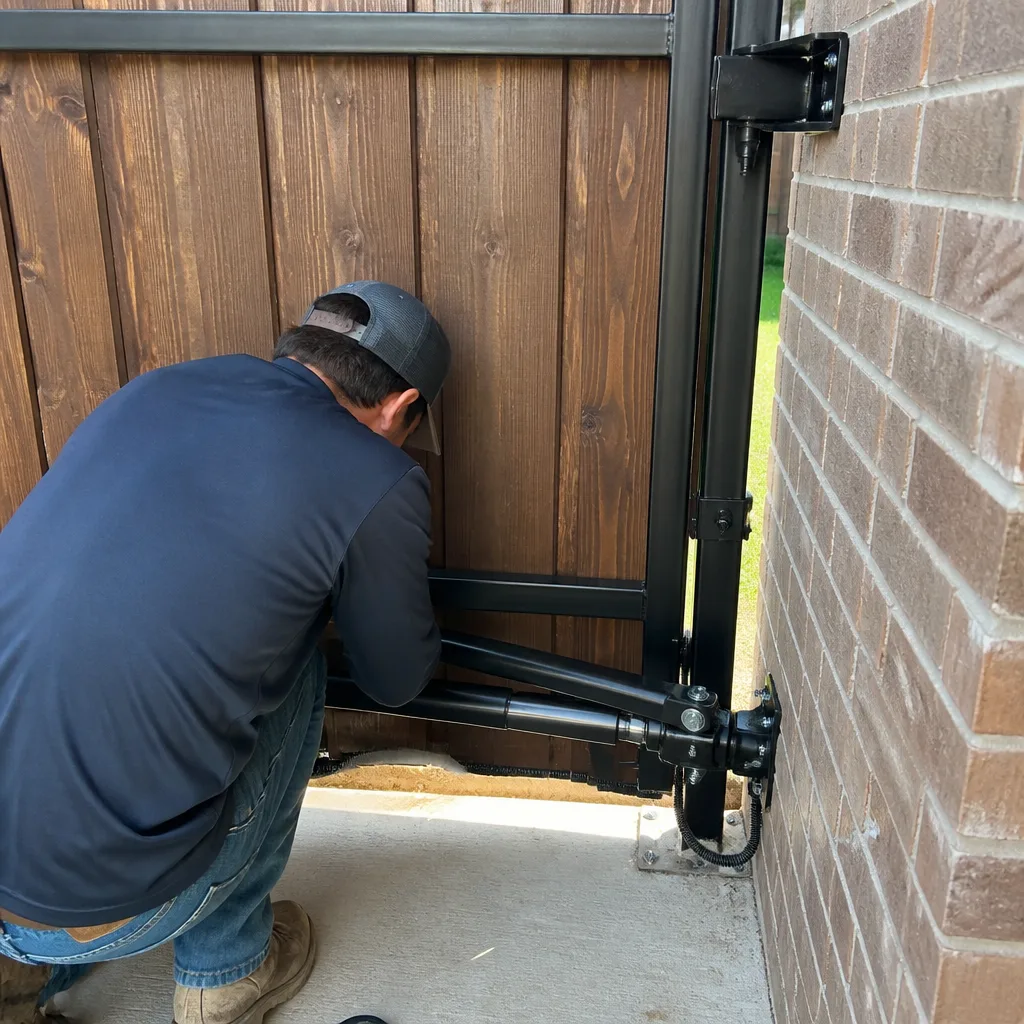 After
AfterSeasonal Gate Repair Care for Rockwall: Year-Round Homeowner’s Guide
Most homeowners in Rockwall don’t think about their driveway gate until it stops moving. That’s the expensive way to own a gate. The steel, the motor, the hinges, and the electronics that make up an automatic gate system are all outdoors, all the time. They take sun, wind, rain, freeze, and the occasional Texas hailstorm without complaint, until the day they don’t. This guide walks through what a gate needs in each season, what you can check yourself without risking injury, and when a repair is cheaper than the damage that comes from waiting. It’s written for the homeowner who plans to stay in their house for years and wants the gate to last as long as the foundation.
Quick Answer
A Rockwall gate needs seasonal attention in four areas: hinges and welds, motor and opener electronics, battery backup (if equipped), and the path the gate travels. Twice a year, in spring and fall, inspect those four things, clean what’s dirty, and tighten what’s loose. Steel components need rust treatment before winter wetness and summer humidity in the Lake Ray Hubbard area can accelerate corrosion. The total cost of seasonal care is typically $89 for a professional tune-up in Rockwall, which is far less than the $450 to $1,200 an emergency repair runs when a neglected component fails.
Table of Contents
- Why Seasonal Care Matters in Rockwall
- What a Seasonal Gate Inspection Covers (Step by Step)
- Spring Care: After Freezes and Rain
- Summer Care: Heat, Humidity, and Hail
- Fall Care: Before the First Front
- Winter Care: Freeze Cycles and Battery Backups
- How Much Does Seasonal Gate Care Cost in Rockwall?
- Common Mistakes to Avoid
- When to Call a Professional
- Frequently Asked Questions
- The Bottom Line
Why Seasonal Care Matters in Rockwall
Rockwall sits on the eastern shore of Lake Ray Hubbard, and that lake is the single biggest factor in how a gate ages here. The air carries more moisture than it does fifteen miles west in Dallas. That moisture settles on steel, works into hinge pivot points, and accelerates rust in ways that homeowners in drier parts of Texas never see. We’ve opened hinge brackets on Rockwall gates that had been installed for only five years and found rust pitting that looked ten years old. The lake humidity is not a theory. It’s measurable, and it shortens the life of untreated metal.
Then there’s the soil. Much of Rockwall is built on a clay-heavy mix that expands when wet and contracts when dry. Concrete piers, gate posts, and even the concrete pad under a slide gate operator all sit in that soil. When the ground moves, a gate post can drift out of plumb by a fraction of an inch. That fraction is enough to make a gate scrape, bind, or refuse to close properly. Seasonal inspection catches that drift early, when re-shimming a hinge is a small fix. Wait until the gate won’t close at all, and the repair often means re-setting a post in new concrete, which is a different order of work and cost.
Spring storms in Rockwall bring hail and wind that can dent panels and knock limit switches out of calibration. Summer heat pushes motors past their normal operating range. Fall brings leaf debris and the first cold fronts that expose weak batteries. Winter freeze cycles stress welds, and the rare ice storm turns a sluggish gate into a dead one. Each season presents its own failure pattern, and each one is cheaper to address before it arrives than after.
There’s also a financial reason to keep a seasonal rhythm. Homeowners in the Heath and Chandlers Landing areas often ask us how long a gate should last. A properly maintained steel gate in Rockwall should run 15 to 20 years before major component replacement. The same gate, ignored, can need hinge replacement in year eight and a new motor in year ten. The difference between those two timelines is roughly the cost of a seasonal tune-up, twice a year, for a decade. That math is not complicated.
What a Seasonal Gate Inspection Covers (Step by Step)
A thorough seasonal check on a Rockwall gate follows the same order every time: structure first, then motion, then electronics. Here’s the sequence a technician works through, and it’s the same order a careful homeowner can use when walking the gate with a flashlight and a wrench.
- Post and hinge inspection. Look at where the gate attaches to the post. Check for rust streaks running down from the hinge plate, cracks in the weld, and any gap that wasn’t there before. Push the gate gently side to side. Movement at the hinge means a bushing is wearing, and a worn bushing will oval out the hinge hole if it’s left alone.
- Track and wheel inspection (slide gates). On a slide gate, roll the gate by hand in the manual release position if the opener allows it. Listen for grinding or a dry-metal sound. Check the track for debris, warping, or a wheel that’s lost its bearing grease.
- Motor and gearbox check. Run the gate through a full open and close cycle. Listen for strain. A motor that’s working harder than it should draws more amps, overheats, and fails early. Hard-working motors are often a symptom of a mechanical problem further down the line, not a motor problem in themselves.
- Limit switch and safety edge testing. Open and close the gate, then stop it mid-way and block the safety edge with a rolled-up towel or a piece of cardboard. The gate should reverse. If it doesn’t, the safety system needs attention immediately. In Rockwall, a gate that doesn’t reverse on obstruction is a liability, not just an inconvenience.
- Battery backup check. If the gate has battery backup, unplug the operator from wall power and run the gate. Weak batteries show themselves in cold weather, so the fall check is the critical one. A battery that’s older than three years should be load-tested.
- Clean and lubricate. Wipe down the track, hinge points, and the operator housing. Use a dry silicone or lithium spray on hinge pivot points and a dry graphite on any lock cylinder. Avoid heavy grease, which collects grit and grinds parts down faster in Texas dust.
The whole sequence takes a professional forty-five minutes. It takes a homeowner an hour and a half the first time, and forty-five minutes after practice. Either way, the value is in the pattern: do it twice a year, every year, and small problems never get a chance to become big ones.
Spring Care: After Freezes and Rain
Spring in Rockwall is the cleanup season. February’s freeze, if it came, stressed the steel and tested the motor. March and April rain has been working on the hinges since the ground thawed. The spring inspection is about damage assessment and rust treatment.
Start with the bottom of the gate. Water pools at the lowest rail, and that’s where rust starts. In the communities around Lake Ray Hubbard, drainage patterns push water toward the base of driveway gates, and many Rockwall driveways slope toward the street, which channels rainwater directly into the gate’s lower hinges. Look for bubbling paint, orange streaks, or small rust blooms. Sand those spots, treat with a rust converter, and touch up with a cold-galvanizing spray or a matching enamel. A half-hour of rust treatment in April prevents a weld repair in November.
Check the gate’s plumb after the winter soil movement. The freeze-thaw cycle in Rockwall’s clay soil shifts posts, and spring is when the shift becomes visible. A gate that scraped the ground or bound up in late winter may be telling you a post moved. Shimming the hinge can correct a quarter-inch of drift. More than that usually means re-setting the post, which is a job for a professional with concrete experience.
Spring is also when the opener’s electronics get their first real test after the dormant winter. Capacitors degrade in cold weather, and control boards that were already marginal often fail the first time the gate runs consistently again in spring. That’s why spring repair calls in Rockwall cluster around opener issues more than mechanical ones. Run the gate daily for a week in late March and listen for hesitant starts or inconsistent travel. Those are electronics warning signs.
For gates in the Dalton Ranch, Buffalo Creek, or Shores areas, spring brings leaf and mulch debris from March winds. Clear the track bed, clean out the photo-eye lenses with a dry cloth, and check that nothing sprouted in the gate’s travel path. We’ve pulled small saplings and vine growth out of track systems in Rockwall more times than we can count.
Summer Care: Heat, Humidity, and Hail
Rockwall summers are the hardest season on motor components. A driveway gate opener sits in direct sun for hours, and surface temperatures on the operator housing can exceed 140 degrees in July. Inside, the motor is already warm from running. Add that to ambient heat, and the motor runs hot all season. Heat is the enemy of insulation, capacitors, and control board solder joints.
Summer gate care in Rockwall is mostly about keeping the motor cool and the gate moving freely. A gate that binds even slightly makes the motor work harder, and a hard-working motor in Texas summer heat fails faster. The summer check is a light one: run the gate, listen for strain, and check that nothing in the hinge or track is causing resistance. If the gate is slow in July, do not ignore it and wait for cooler weather. Motors have thermal shutoffs, and a gate that stops working on a 102-degree day in Rockwall is a gate that has reached its thermal limit. The repair is not waiting.
Humidity works on steel even when the gate is sitting still. The lake air around Rockwall keeps moisture on the metal through the night, and rust continues forming in summer as much as in spring. Touch up any chips or scratches before August, when the combination of humidity and heat accelerates oxidation fastest.
Hail season, March through June, is a wildcard. Hail dents panels but rarely breaks the gate’s function. The damage that does matter is to the opener’s exposed electronics and to the safety edge sensor, which sits on the leading edge of the gate and takes the brunt of any impact. After a hailstorm, test the safety edge by obstructing the gate’s path and verifying it reverses. A cracked sensor housing that lets moisture in will fail intermittently, and an intermittent safety sensor is a dangerous problem.
One more summer note for Rockwall: lake recreation means more vehicle traffic through gates, and more traffic means more duty cycles. A gate in Chandlers Landing or The Shores that cycles forty times a day in summer instead of ten times a day in winter wears its components proportionally faster. Seasonal tune-ups are more important, not less, for gates that get heavy summer use.
Fall Care: Before the First Front
If you only do one seasonal gate inspection a year in Rockwall, make it the fall one. October is the sweet spot: after the heat has broken, before the first freeze arrives. Everything you find and fix in October is a problem you will not have in January.
The fall checklist starts with the battery backup. Cold weather reduces battery capacity by roughly 20 to 30 percent depending on chemistry, and a battery that tests marginal in October will be dead by February. Most residential gate backup batteries last three to five years in Rockwall’s climate. If yours is older than three, have it load-tested. A dead backup battery means the gate no longer opens during a power outage, which is precisely when the homeowner wants to drive in and out. Power outages in Rockwall are sometimes planned during winter weather events, which makes a working battery backup a real convenience, not a luxury.
Check the gate’s speed and travel. Cooler temperatures change the viscosity of grease and oil in the opener’s gearbox. A gate that ran fine in August may be noticeably slower in November. Slow operation over the winter means the motor is drawing more current and working against thickened lubrication, which contributes to early motor failure. The fix is often a simple gearbox lubricant change, something a technician does as part of a seasonal tune-up.
Clean the track thoroughly in fall. October and November leaf fall in Rockwall is heavy, and leaves plus rain make a paste that gets packed into track grooves and around wheels. That paste hardens as it dries, and in December it becomes a hard crust that makes the gate grind. A leaf blower and a flat scraper are the right tools. Do not use a pressure washer on the gate’s track or operator; pressurized water drives grit into bearings and connectors and causes more problems than it solves.
Finally, inspect the welds. Cold weather makes steel brittle, and a weld that’s been developing a crack will show it more clearly in fall than in summer. Look at every weld point on the gate’s frame, the hinge attachment plates, and the motor mounting bracket. A small crack caught in October is a $150 weld repair. That same crack in February, after freeze cycles, is a broken gate leaf on the ground.
Winter Care: Freeze Cycles and Battery Backups
Rockwall winters are short but they test a gate’s weaknesses. The freeze cycles are the problem. A Texas winter does not freeze and stay frozen the way a northern winter does; it freezes at night and thaws in the afternoon, sometimes several times in the same week. Each freeze-thaw cycle forces water trapped in small spaces to expand and contract. In steel, that means expansion in hinge pins and bolt holes. In electronics, it means condensation forming on control boards inside the operator housing.
The most common winter gate failure in Rockwall is a gate that won’t open on a cold morning. That’s usually a battery backup that sat all summer without being tested, or a capacitor in the opener that gave up when the temperature dropped. Both are avoidable. October battery testing catches the first. Running the gate daily throughout winter, even on days you don’t leave the driveway, keeps the capacitor charged and the system exercised.
Keep the gate’s travel path clear of ice. Rockwall gets one or two ice events a winter, and even a thin crust of ice on the track or the gate’s bottom rail can prevent the gate from moving. The force required to break that ice is more than the opener is designed to exert, and forcing the issue burns out motors. If the gate is frozen to the ground, break the ice mechanically by hand before running the opener. Do not run the opener and hope it will free itself. It won’t, and the repair bill proves it.
Winter is also when hinge problems announce themselves with noise. Cold shrinks metal slightly, and a hinge that has always been a little loose or a bushing that’s always been a little dry will squeak, groan, or chatter in the cold the way it never did in summer. That noise is information. It tells you where to lubricate and what to tighten before the part fails entirely. A dry hinge in January, left alone, is a seized hinge by March.
The last winter job is simple but often overlooked: wipe down the photo-eye lenses. Winter fog and drizzle coat the lenses with a film that reduces their sensitivity, and a photo-eye that can’t see the reflector will prevent the gate from closing. A ten-second wipe with a dry cloth solves it. If the gate still won’t close after cleaning the lenses, the problem is likely in the wiring or the control board, and that’s a service call.
How Much Does Seasonal Gate Care Cost in Rockwall?
Seasonal gate care in Rockwall falls into three price tiers, depending on what the inspection turns up. The baseline is the tune-up, which is a flat $89 through Ironworks Gate Co. and covers the inspection, cleaning, lubrication, and minor adjustments. Repairs found during the tune-up are quoted separately, before any work begins, so the homeowner always knows the total before a single bolt is turned. Here’s what Rockwall homeowners typically see:
| Service | Typical Cost in Rockwall | Notes |
|---|---|---|
| Seasonal tune-up | $89 flat | Inspection, cleaning, lubrication, minor adjustment |
| Hinge bushing replacement | $120-$180 per hinge | Most common fix found during tune-ups |
| Weld repair (small crack) | $140-$220 | Depending on location and access |
| Battery backup replacement | $180-$350 | Depends on opener model and battery type |
| Limit switch replacement | $110-$190 | Common after hail or post drift |
| Motor/gearbox replacement | $450-$900 | Most expensive common repair, usually avoidable with maintenance |
| Full post re-set in concrete | $600-$1,200+ | Required when drift exceeds hinge adjustment range |
These are the numbers we see across Rockwall, Heath, McLendon-Chisholm, and the lakeside communities. Your gate, your opener model, and the condition of the existing hardware will move the numbers. The quote we give you before work starts is the price you pay. There’s no after-the-fact adjustment, and that’s true whether the job takes one hour or four.
One mechanism worth understanding: lubrication and adjustment are maintenance. Hinge replacement, weld repair, and battery replacement are repairs that maintenance prevents. The $89 tune-up finds the $150 problem before it becomes the $900 one. That’s the entire economics of seasonal gate care in one sentence.
Common Mistakes to Avoid
- Waiting until the gate stops moving. By the time a Rockwall gate won’t open, the underlying cause has usually been developing for months. The repair is always more extensive and more expensive than the fix would have been if caught earlier.
- Lubricating with WD-40. WD-40 is a solvent and water displacer, not a lasting lubricant. It cleans a hinge and then leaves it dry, which accelerates wear. Use a dry silicone or lithium spray on hinge pivots instead.
- Pressure washing the gate or track. High-pressure water forces grit into bearings, connectors, and the operator housing. Grit in a bearing destroys it. A garden hose on low pressure or a simple wipe-down is the correct approach.
- Ignoring a noisy hinge. Noise is the earliest warning sign of wear. A hinge that squeaks in January in Rockwall will seize by spring if left dry. Squeeks are a one-minute fix; seizing is a repair call.
- Running the gate when it’s frozen to the ground. The opener will try, overheat, and potentially burn out the motor or strip the gearbox. Break the ice manually first, then run the gate.
- Replacing a motor without finding why it failed. Motors rarely fail for no reason. A seized hinge, a misaligned track, or a post that drifted out of plumb creates the load that kills the motor. Fix the mechanical problem, then the motor.
- Skipping the battery test because “we never lose power.” Battery backup only matters during power loss, and the time to discover a dead battery is not during that power loss. Test it in October.
When to Call a Professional
Some of the work in this guide is genuinely DIY-appropriate: cleaning the track, wiping photo-eye lenses, brushing off rust and touching up with cold-galvanizing spray, and listening for strange sounds. The line where professional help starts is clear. Any repair involving the gate’s springs, the motor’s internal components, the control board, the hinge welds, or the post’s concrete footing is professional territory. The springs and cables on a gate system hold tension. A cable that lets go while you’re working under the gate can cause serious injury, and that’s not a gamble worth taking to save a service call. The same applies to any work on the operator’s electrical wiring. We work on gates every day in Rockwall and we still treat the tension and the power as the two things that demand respect. Ironworks Gate Co. offers free estimates in Rockwall - call (936) 715-3043 and we’ll tell you exactly what the gate needs and what it will cost before any work is scheduled.
Frequently Asked Questions
Twice a year - once in spring (March or April) and once in fall (October) - is the right cadence for Rockwall’s climate. The fall service is the more important of the two, because it catches battery and electrical issues before winter freezes hit. If you only schedule one tune-up, schedule the fall one. Call (936) 715-3043 to book an $89 Seasonal Tune-Up, and we’ll work around your schedule.
Gate repair in Rockwall typically runs between $120 and $900, depending on the component. Hinge bushings are the cheapest common repair at $120 to $180. Motor and gearbox replacement at $450 to $900 sits at the top of the typical range. Most repairs from neglected maintenance fall somewhere in the $200 to $400 middle band. The exact quote is free, and the price we quote is the price documented on the work order.
In most cases, yes. The majority of gate repairs in Rockwall are completed in a single visit, because our technicians carry common parts for all nine major opener brands we service, including Ghost Controls, DoorKing, and Elite. The right part on the truck means the job gets done on the first trip, not the third. Call (936) 715-3043 and a live person will confirm availability and get you scheduled.
Cold weather thickens the lubricant in the operator’s gearbox and the grease in the hinge bushings, which increases resistance and slows the gate down. That’s normal seasonal variation, but a dramatic slowdown is different. It signals a mechanical problem that’s about to become a failure, and it’s worth a professional check before the gate stops entirely.
Winterizing a Rockwall gate means testing the battery backup, breaking any ice from the travel path before running the opener, keeping the photo-eye lenses clean during fog and drizzle, and running the gate daily through the cold months. That’s the full list. The work is small, but skipping it is how the most common winter failures - dead batteries and frozen-open gates - happen.
A well-maintained steel gate in Rockwall should last 15 to 20 years before the frame or the operator needs major replacement. The opener motor usually gives out first, at the 8 to 12 year mark, depending on duty cycles and maintenance history. Gates that receive twice-yearly tune-ups consistently outlast neglected gates by five years or more, which is a meaningful amount of money on a replacement install. The $89 tune-up, twice a year, is the cheapest insurance the gate has.
The Bottom Line
Rockwall’s lake humidity, clay soil, summer heat, and freeze-thaw winter cycles combine to work on a gate year-round. The gate never gets a season off, and neither should the maintenance. Spring and fall inspections, at the $89 Seasonal Tune-Up rate, catch hinge wear, post drift, battery degradation, and weld cracks before they become the $450 to $1,200 emergency repairs our technicians see too often. A five-minute visual check each month, a forty-five minute tune-up twice a year, and a phone call to a professional when you hear a new noise or see a new stain of rust. That’s the entire program. Homeowners who follow it get gates that last twenty years. Homeowners who don’t get service calls. We would rather see gates in Rockwall age well than fail, and the 90-Day Done Right Promise backs every job we do.
Written by Victor Salinas, Owner at Ironworks Gate Co., serving Rockwall since 2013.