
Free on-site gate assessment - hinges, posts, and your LiftMaster or Nice gate operator checked before anything is quoted
The assessment is free and the quote is the invoice.
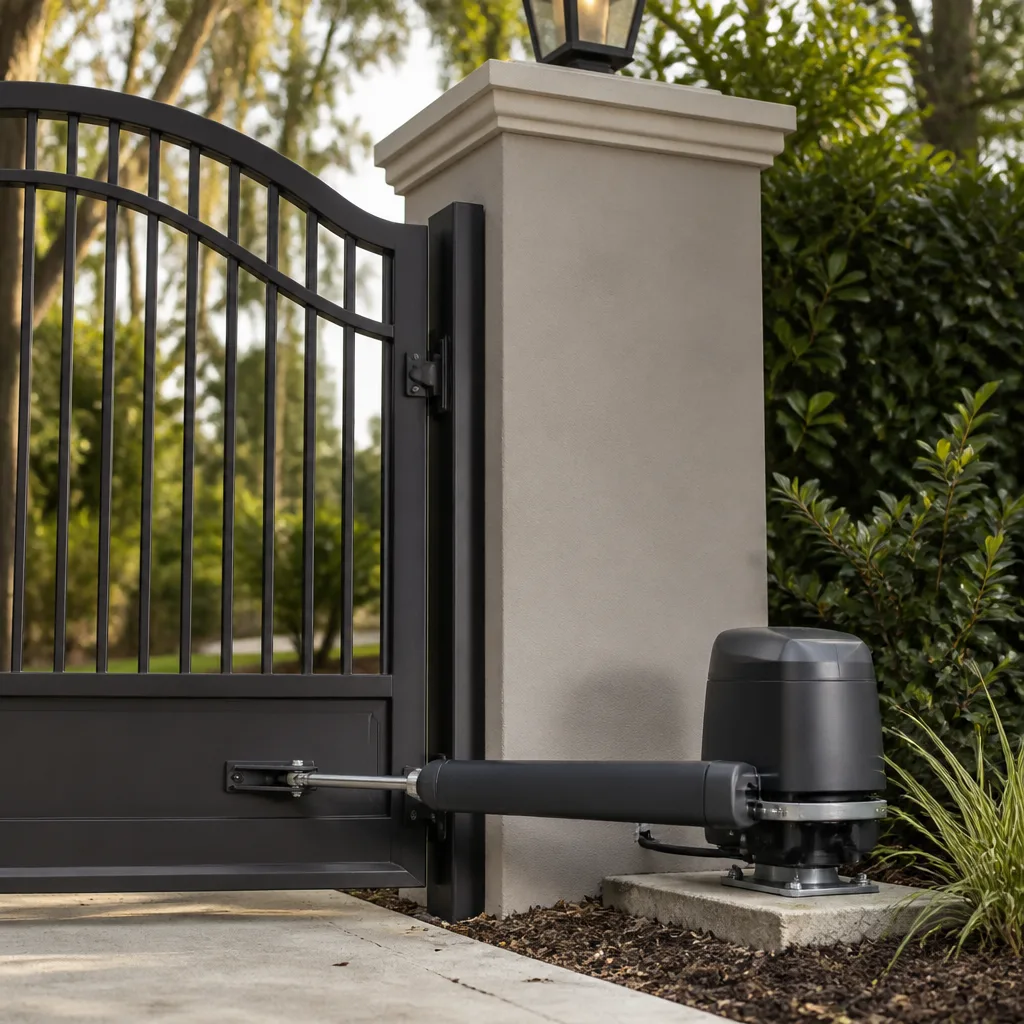
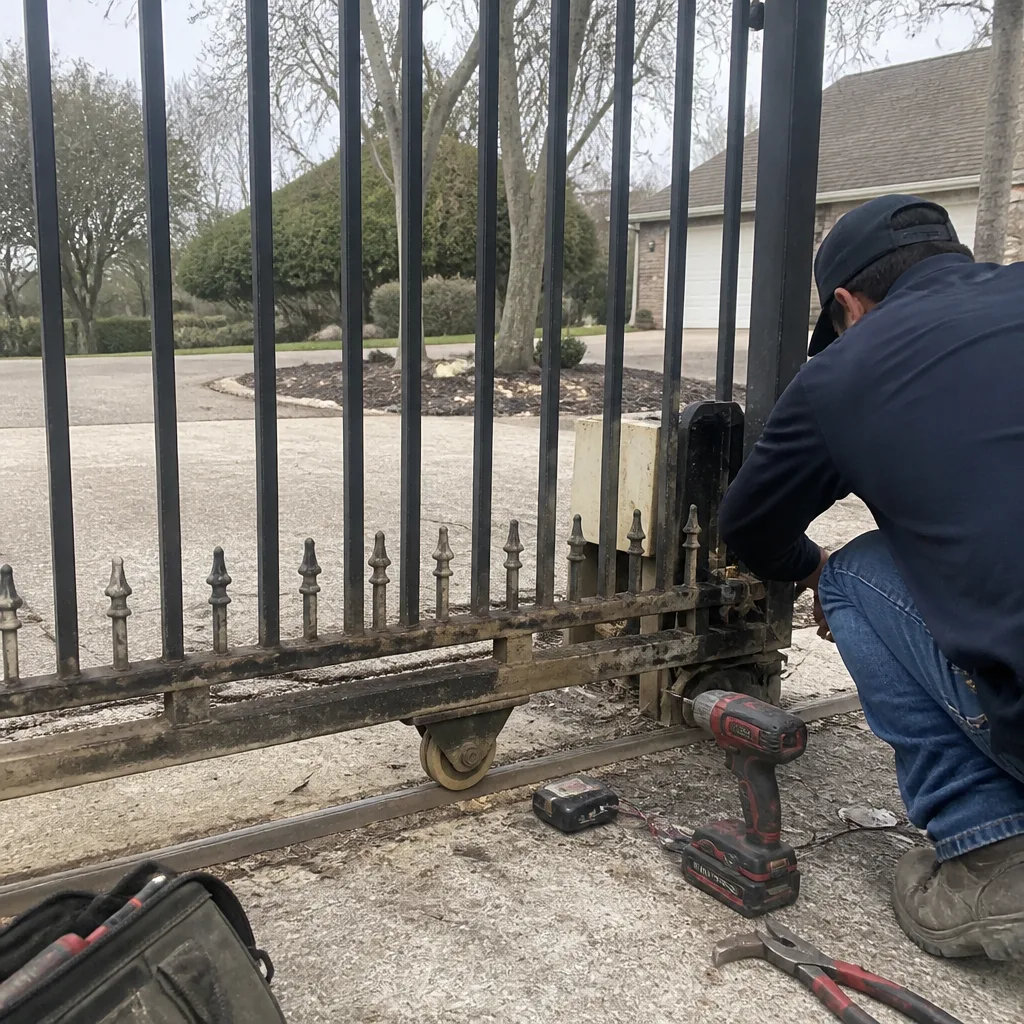 Before
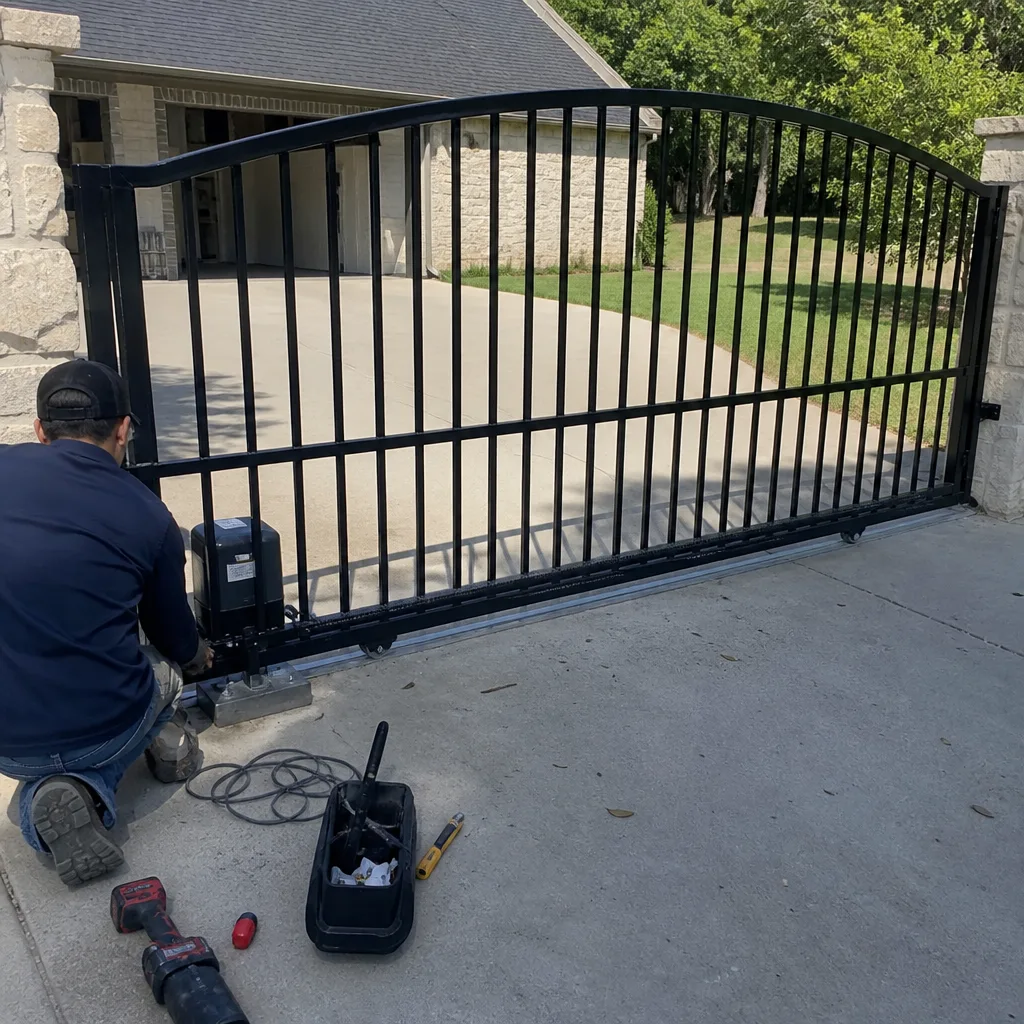 After
After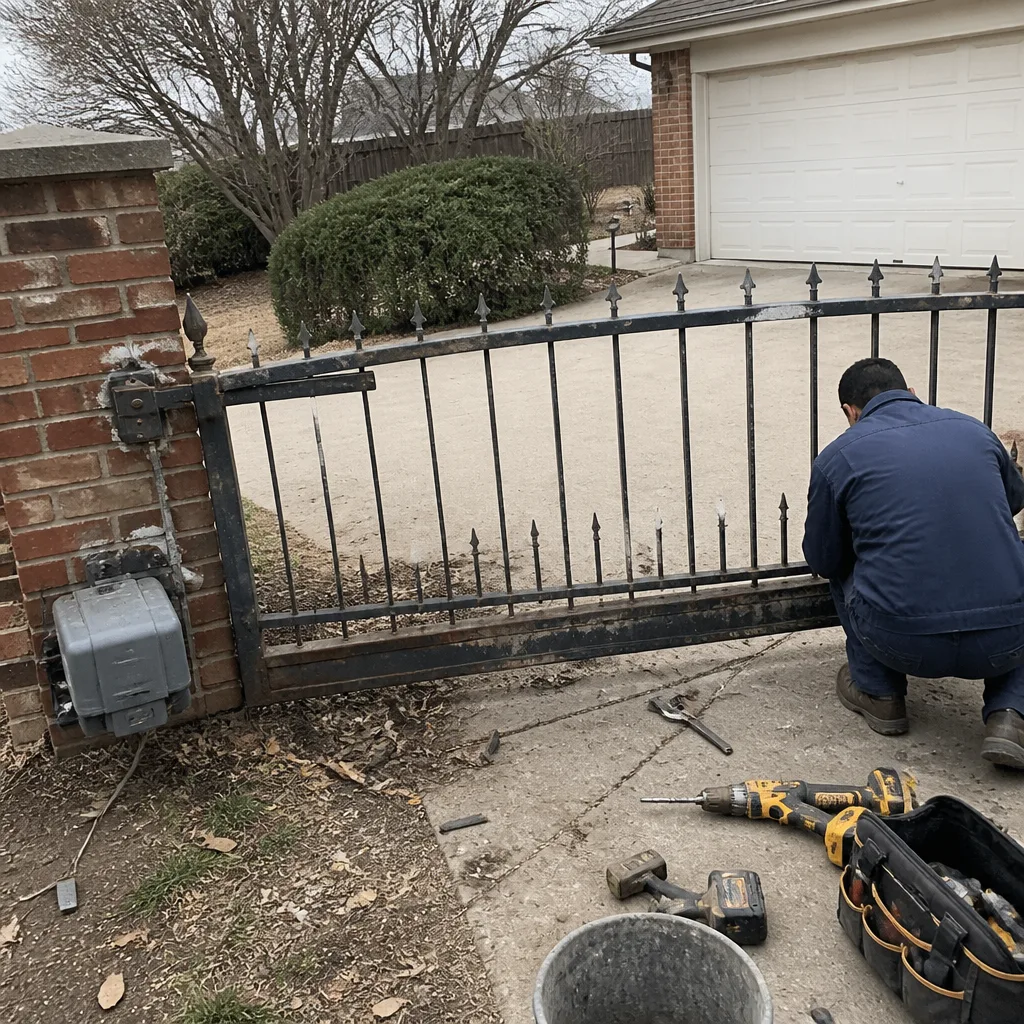 Before
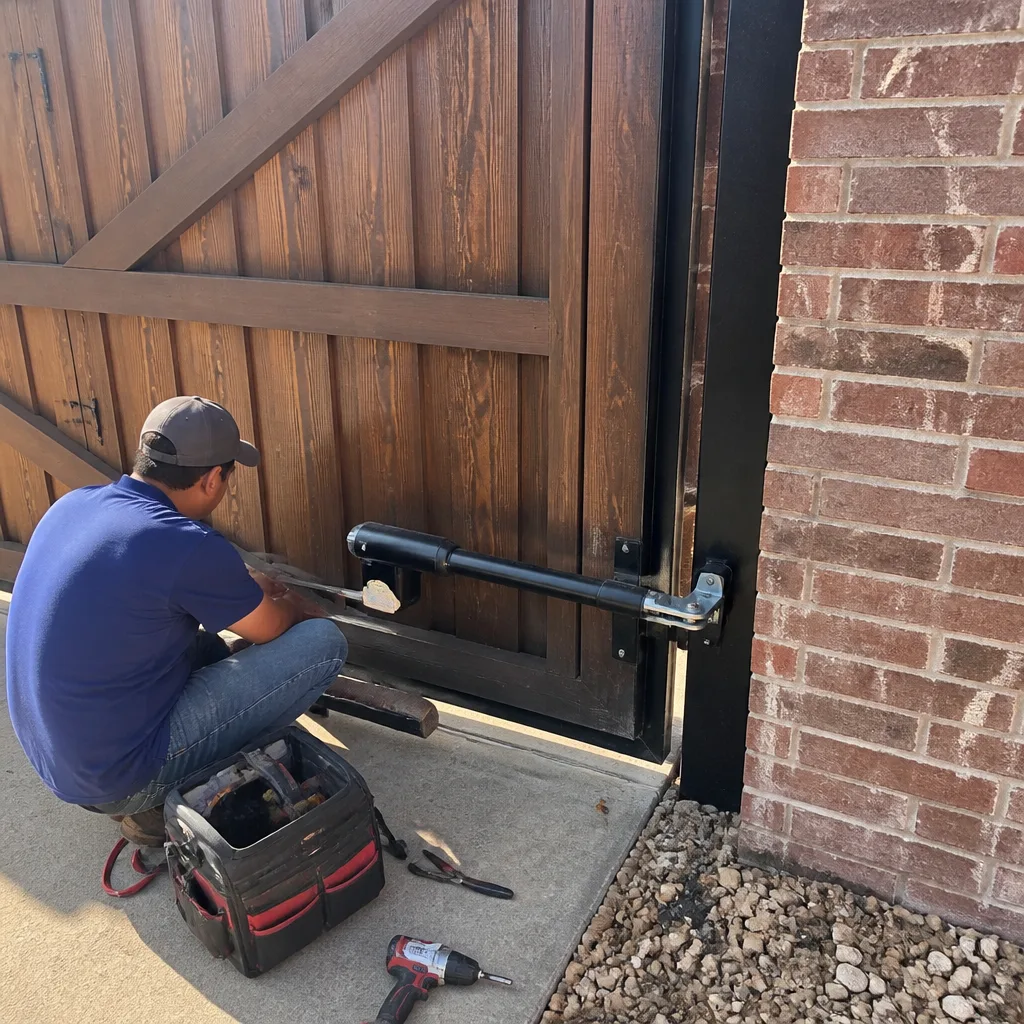 After
After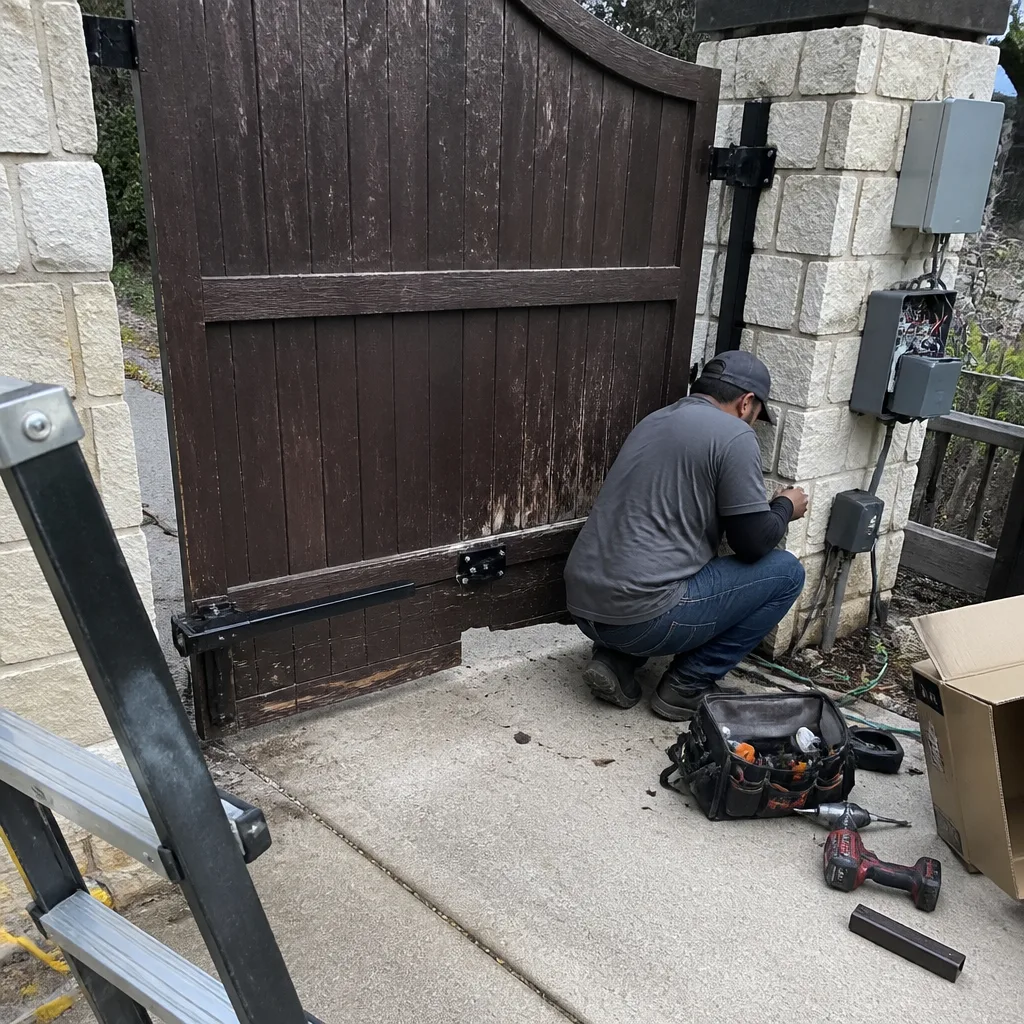 Before
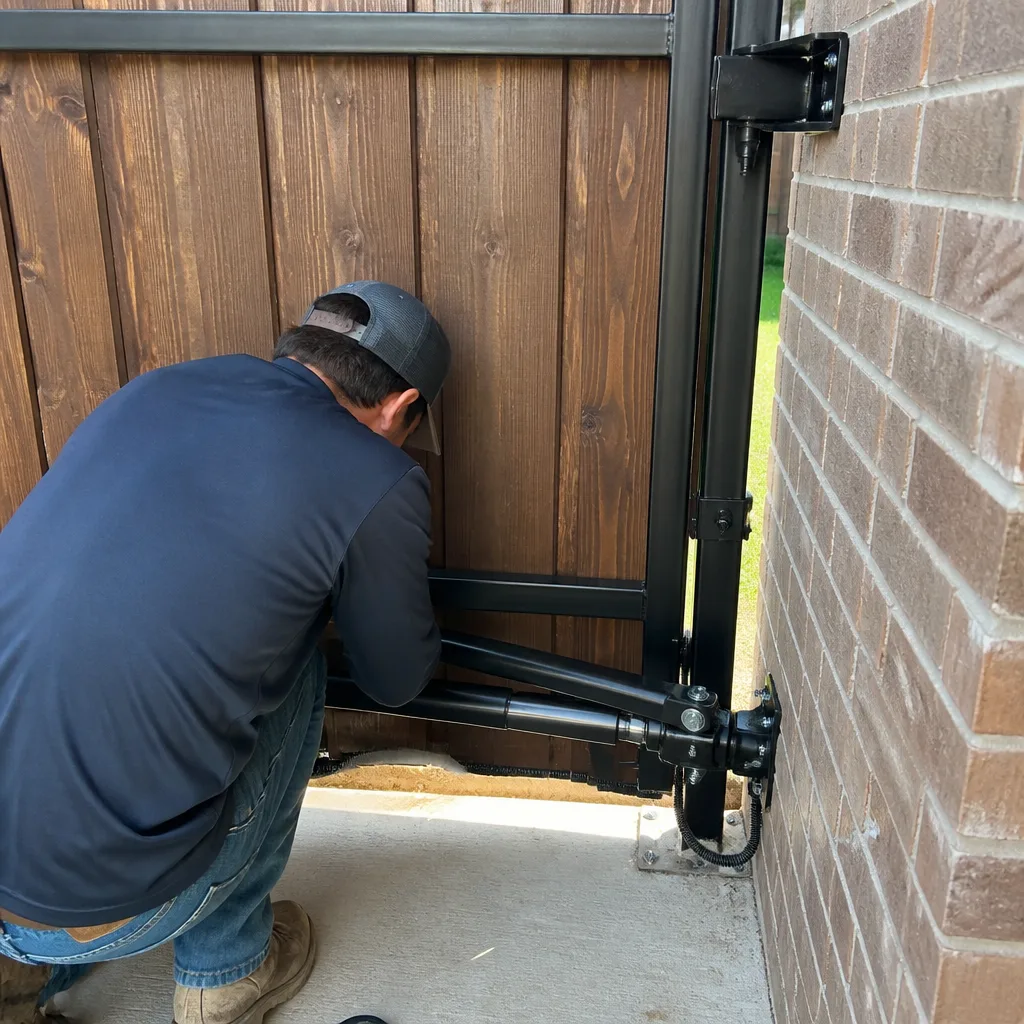 After
AfterFAAC Gate Motor Replacement: The Rockwall Owner’s Guide
We stock and install FAAC-compatible gate motor replacements across Rockwall County, with most complete motor swaps running between $850 and $2,400 installed depending on your model and swing or slide configuration. We carry the common FAAC 402, 412, 415, 422, 750, 844, and C720 series parts on our trucks, so in most Rockwall neighborhoods we can diagnose and replace the same day we arrive. The way most homeowners find out their FAAC motor is done is simple: the gate starts moving slower in the cold, then one morning it just hums and doesn’t move at all, or the gate beeps twice and the keypad goes dark.
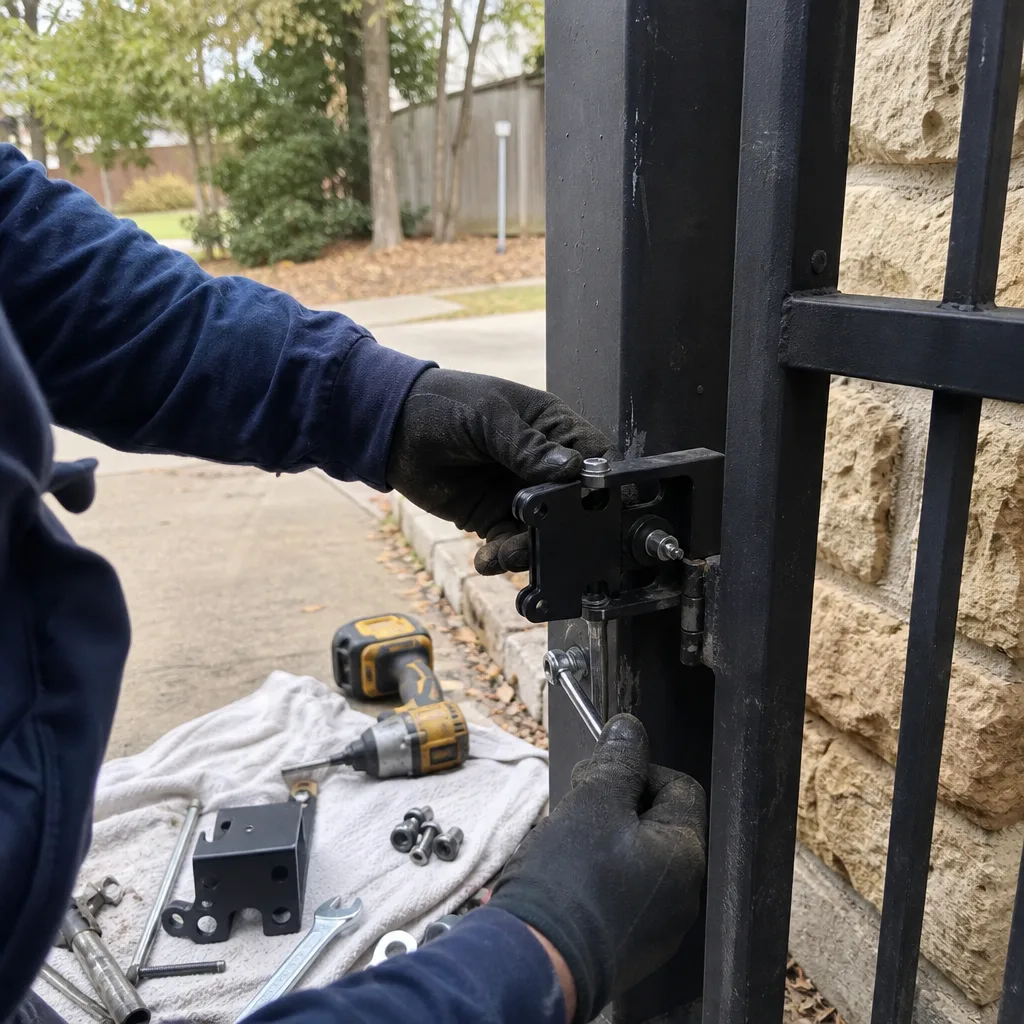
FAAC builds their operators with a particular design philosophy: hydraulic automation on their swing arms and a repairable chassis on their slide operators. That’s good news when a capacitor or a control board fails because it means the part can be swapped without tearing out the whole system. The less good news is that the Texas sun and Rockwall’s temperature swings are hard on those sealed hydraulic units, and once the internal seals dry out, no amount of fiddling with the limit switches is going to bring the arm back to life.
Which FAAC Models This Applies To
FAAC has been building gate operators since 1965, and over those decades they’ve produced a long line of models you’ll still see on Rockwall driveways today. The older 402 and 412 hydraulic swing operators are still common on estate gates built in the 1990s and early 2000s. The 415 and 422 series replaced them, and the current 750 and 770 series are the modern residential swing workhorses. For slide gates, the 844 and C720 families cover most residential installations in this part of Texas.
Here’s the compatibility gotcha that catches a lot of owners: FAAC control boards are not universal. A 455 D board won’t run a 750 operator without a wiring adaptation that most generalist handymen get wrong. The board revision matters too. If your FAAC has a hydraulic swing arm, the motor and pump are integrated into the arm itself, meaning a “motor replacement” is often a full arm swap. On slide operators, the motor is a discrete unit driven by a chain or belt, and motors can sometimes be replaced independently of the gearbox. When we arrive in Rockwall, the first thing Victor Salinas will do is pull the cover, read the model plate mounted on the chassis, and match the replacement to the exact series and revision before anything gets unbolted.
The OEM versus aftermarket question is worth settling honestly. FAAC’s original parts carry a quality expectation you can rely on, but they’re priced accordingly and sometimes have lead times measured in weeks. We’ve sourced tested aftermarket motors for the 400-series swing arms that perform reliably for years at a lower installed cost. Our position is simple: when OEM is essential for the job, we use OEM. When a quality aftermarket equivalent does the same work for less of your money, we tell you that and let you decide before any part gets ordered. Independent shop here, not a FAAC dealership. No incentive to push one line over another.
Signs Your FAAC Gate Motor Replacement Is Failing
FAAC operators rarely die all at once. They slow down, complain, and give you a window to act before the gate just refuses to move. Here’s what we hear from Rockwall owners in the weeks before a motor fails outright:
- Gate moves noticeably slower than it did last summer. This is the most common early symptom on hydraulic FAAC arms. The internal seals are losing pressure, and the pump is working harder to move the same gate. In Rockwall, we see this accelerate after the first cold snap each fall because the hydraulic fluid thickens.
- Humming or buzzing with no movement. On slide operators, this usually points to a failing start capacitor or a motor that’s seizing. The capacitor is a cheap fix. The seized motor is not. We’ll tell you which one you’ve got before we quote anything.
- The gate reverses mid-travel or opens on its own. On FAAC systems with force-sensing control boards, a motor pulling excessive current can trip the obstruction sensing even when nothing is in the path. The motor is telling you it’s working too hard.
- Oil weeping from the swing arm housing. FAAC hydraulic arms are sealed units. If you see a dark film running down the arm or pooling at the pivot, the seals have failed. That arm is on borrowed time.
- Intermittent operation that resets after power cycling. Thermal overload protection in the motor or control board will cut power when temperatures climb, then reset after things cool down. In a Rockwall August, a gate that works at 7 a.m. and quits by 4 p.m. is telling you the motor is running too hot to survive much longer.
Replacement Cost & What’s Included
In Rockwall, a complete FAAC gate motor replacement generally lands between $850 and $2,400 installed. The spread comes down to which FAAC series you have and what kind of gate it’s moving. A single swing arm replacement on a 415 series runs at the lower end of that range. A full slide operator swap with new chain, brackets, and limit assemblies on an 844 moves toward the top. If your system needs a new control board paired with the motor, add roughly $250 to $450 depending on the board revision.
Every quote we give includes the part, the labor to install it, the wiring and setup of the new operator, travel adjustments, force settings, and a full safety check including your photoelectric sensors and edge detection. The price is quoted and agreed before any work starts. You will not see a different number on the invoice than the one we wrote down on the estimate. Every replacement we install is backed by our written 90-Day Done Right Promise. If it isn’t right, we come back and make it right. No arguing, no paperwork, no exceptions.
And the standing offers apply here like they do on every job: $50 off any repair over $250, free second opinions on any written estimate, and a 5% discount for seniors and veterans, always.
DIY or Call Us?
Let’s be straight about the part of this you can handle safely and the part you shouldn’t touch. You can check the basics: confirm the breaker hasn’t tripped, verify the gate hasn’t come off its track or hinges, and look for visible oil leaks on a swing arm. Those checks cost you nothing and they help us diagnose faster when we arrive.
What you should not do is crack open a FAAC hydraulic arm or a slide operator chassis. These units carry live 120V or 240V power into enclosures that are not designed for casual hands. The capacitors inside hold a charge that can hurt you long after the breaker is off. Beyond the electrical hazard, FAAC operators have force limits and limit switch settings that, if set wrong, turn a 400-pound gate into a serious hazard for a child, a pet, or a parked car. Gate motors are not a weekend project. Call (936) 715-3043 and we’ll send a background-checked technician who works on FAAC equipment as a matter of routine, not as an experiment.
If the gate doesn’t work right, nothing else about it matters.
FAQs
In the Rockwall climate, with summer heat that stays above 95 degrees for weeks and winter nights that drop below freezing, a well-maintained FAAC operator lasts between 8 and 14 years. Hydraulic swing arms tend to run closer to 10 years before seal degradation catches up with them. Slide operators with belt or chain drives often reach the upper end of that range when they’re serviced regularly. The 400-series FAAC arms from the 1990s sometimes outlast the newer ones because the castings were heavier and the duty cycles were gentler.
Sometimes, and we’ll tell you honestly when repair is the smarter money. Start capacitors, limit switches, and control boards are all repairable components that cost less than a full motor replacement. But a seized motor, a failed hydraulic pump, or blown internal seals are not repairable in any practical sense. We don’t rebuild sealed FAAC arms on site and neither does anyone else who’s being honest with you. When repair is possible, that’s what we’ll recommend. When replacement is the only durable answer, we’ll tell you that too, with the price attached.
For a familiar FAAC series with no surprises, a single swing arm replacement typically takes two to three hours on site. A full slide operator swap with new brackets and wiring generally runs four to five hours. Most Rockwall jobs are completed in one visit. If we’re matching an older FAAC model and need to confirm board compatibility or modify a mount, we’ll tell you before we touch anything, and we’ll have the part in hand before we start.
We keep common FAAC motors and components on our trucks: 400-series swing arms, 750-series motors, 844 slide operator parts, capacitors, and control boards. Less common parts come through our Dallas-Fort Worth distributors, typically within one to three business days. If you’re in Rockwall and the gate is stuck open right now, call (936) 715-3043. We’ll tell you over the phone what we’re likely dealing with and when we can be there.
We do. FAAC is one of nine automation brands we service and stock parts for, including LiftMaster, Mighty Mule, Ghost Controls, BFT, Linear, Viking, DoorKing, and Elite. Whatever is on your driveway, we’re trained and equipped to fix it the first visit.
Written by Victor Salinas, Owner, Ironworks Gate Co. at Ironworks Gate Co., serving Rockwall and nearby areas.